
A leading pro-Kremlin Russian military blogger with reported ties to Russia’s intelligence services has been arrested in Montenegro, after warnings of attempts to destabilise the Balkan country, officials have said.
Mikhail Zvinchuk, the founder of the influential Rybar war blog, was detained on Friday alongside his wife and three other Russians by police and security agents in the Adriatic resort town of Risan, on suspicion of spreading Russian influence, local media reported.
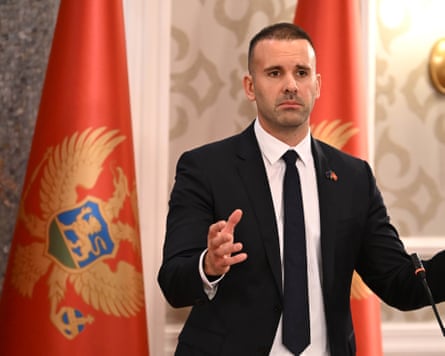
Montenegro’s prime minister, Milojko Spajić, confirmed Zvinchuk’s detention in a post on X, saying it followed warnings that the country would face attempts at destabilisation and hybrid warfare.
The Russian Telegram news channel Baza said officers detained Zvinchuk at the luxury Mövenpick hotel in Risan. It said the group was taken to Podgorica, Montenegro’s capital, for questioning and their phones and passports were confiscated.
Founded in 2018 by Zvinchuk, a former press officer at Russia’s defence ministry, Rybar is one of the most popular Russian military blogs covering the war in Ukraine, with more than 1.5 million subscribers on Telegram. It forms part of a sprawling online media ecosystem that promotes Vladimir Putin’s invasion of Ukraine.
But Rybar’s activities extend well beyond Ukraine, with the channel promoting pro-Kremlin narratives in Africa and the Middle East. More recently, it has been accused of amplifying far-right narratives surrounding the migration crisis in Ceuta, a Spanish enclave in north Africa.
“At the moment, the project team is in contact with Russia’s foreign ministry, which is working to resolve the situation. Since there were no violations of local legislation, we expect all detainees to be released,” the channel said on Telegram.
Britain sanctioned Zvinchuk and Rybar in December 2025 over their role in spreading Kremlin propaganda and undermining support for Ukraine. The British government said Zvinchuk received funding from the Russian state-owned defence conglomerate Rostec, and worked with members of Russia’s intelligence services.
The US has separately accused Zvinchuk of attempting to interfere in the 2024 presidential election, offering a reward of up to $10m for information about those involved.
Days before his arrest, Zvinchuk boasted on social media that he had managed to enter Montenegro despite being subject to western sanctions and an entry ban. He mocked a border guard who, he said, had searched his belongings but failed to check his name against a database.
The Kremlin spokesperson, Dmitry Peskov, said Moscow was aware of Zvinchuk’s detention and would work to secure his release.
Russia’s former president Dmitry Medvedev suggested Moscow could detain European and American citizens to use in prisoner exchanges to secure Zvinchuk’s release. “We will probably have to replenish our pool of prisoners for exchange with European and American idiots in order to get our own people back,” he wrote on social media.
The arrest is likely to further strain relations between Montenegro and Russia, which have long been tense. In 2016, Montenegrin authorities accused Russian operatives of plotting with Serbian ultranationalists to stage a coup, allegations Moscow denied.
Montenegro, which joined Nato in 2017 and is seeking membership of the EU, imposed sanctions on Russia after its full-scale invasion of Ukraine in 2022.
The country recently approved plans to end visa-free travel for Russian citizens from 1 November, closing off a popular holiday destination for Russian tourists as it brings its visa policy into line with the EU.