
In 2008, when I was a reporter for a leading Ukrainian TV station, I insisted on following Barack Obama’s campaign for US president. Few Ukrainian media outlets could afford to send a journalist to travel around the US to report on the election; even the newsrooms of those that could took some convincing.
As a media student in 2004, I had spent two months on the streets of Kyiv during the Orange Revolution, where people protested a stolen election and succeeded in defending their vote. The excitement of the fight for freedom and justice, combined with the energy of mass gatherings, was seductive. I recognised a similar momentum in the US during Obama’s campaign and wanted to see how things felt on the ground. As a Ukrainian, I could relate to Obama’s promises to restore respect for human rights and the rule of law, and his desire to mobilise people around the idea of “hope”. It also stood in contrast with what I knew of the US: I had studied foreign news reporting at the time of the US invasion of Iraq and the military’s crimes in Abu Ghraib and Guantánamo.
I went on to cover four more US elections. What stood out to me, and still bewilders me now, is the extent to which the conversation around access to affordable health care and education has become radicalised in the US. To a Ukrainian, or indeed most Europeans, these are simply what people expect from a functioning state. I recall a Nobel prize laureate – the American scientist Martin Chalfie, who won the 2008 chemistry prize and taught at Columbia University – telling me he was planning to use the award money to pay his daughter’s college tuition. I was shocked.
As a foreign reporter in the US, I witnessed debates around these issues become increasingly hostile and disconnected from reality. In 2020, the first year of the Covid-19 pandemic, Donald Trump supporters considered anyone wearing a face mask to be suspicious; health and safety measures, they believed, were a ploy to deprive them of their civil liberties. No rational argument could convince them otherwise. Fast forward to 2025, and Trump has appointed as the US secretary of health an anti-vaccine activist who champions debunked scientific theories and insists that mRNA vaccine technology is dangerous, despite its proven efficacy.
There is no longer a shared sense of what is true. I know first-hand that when facts are questioned, rather than verified and used to build common ground, it becomes harder to agree on even the most basic issues – including what the government is for. People stop debating what can be changed and improved about the public sector and instead start to see it as something to be dismantled. The underlying problems, meanwhile, remain unsolved.
There have always been reasons to criticise US foreign policy. Yet in the past, many of us still looked with a certain envy at the strength of the country’s institutions, the independence of its media, and the willingness of its citizens to engage in democratic life. Today, as Ukraine fights a war to defend its democracy – to preserve a state where institutions serve the people rather than dictators, where the press remains independent, and where citizens can shape the politics around them – the contrast between the two countries is striking.
In Ukraine, the war claims the lives of soldiers every day. Resources are scarce, the economy has been shattered, and yet even the poor contribute what they can to support fellow citizens, often through small but meaningful donations. Those experiences make it even more unsettling to observe how in the US, democracy is being eroded and dismantled, sometimes without an effective fight. And how a prosperous society, facing no comparable threat, can hesitate to redistribute resources that are readily available.
In the run-up to the 2008 US election, the first one I covered as a journalist, I headed to Ohio. Now largely a Maga stronghold, Ohio was at the time the archetypal swing state. Within a compressed geography, you could trace the electoral soul of the nation. I stopped in Youngstown, in the Rust Belt, and met with people who had lost their jobs and sense of security.
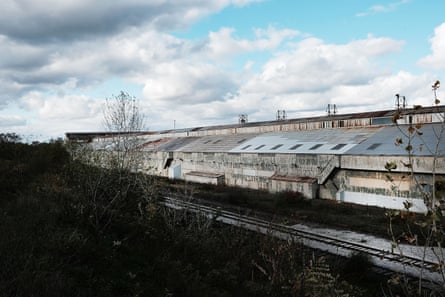
The first rally in support of Obama I attended was in Campbell, not far from Youngstown. High-profile Democrats urged people to call their friends and knock on doors. But many doors there remained closed – literally. In the suburbs, entire streets were lined with boarded-up homes. Coming from a country that wasn’t wealthy, I was shocked by how abandoned parts of the US looked. Youngstown, one of the cities that helped fuel the American Industrial Revolution, has seen its population halved over the past 40 years. Steel mills had shut down. Carmakers had relocated overseas. I saw half-empty neighbourhoods, jobless families living in trucks.
On one such street lived Henry Sadinsky, 77, a retired worker who was campaigning to bring industry back to the city. “What’s happening here is happening across the whole country,” he told me. He hoped Obama would help rebuild what had been lost. At a nearby bus stop, I met a woman who had just been laid off. Through tears, she told me she had lost not just her job but also her home, her health insurance and any sense of safety. That kind of unravelling was hard to imagine even in Ukraine. Though a hospital in Ukraine may not offer the same quality of care as in the US, you would be treated regardless of whether you have insurance. You cannot be evicted from your home from one day to the next. That was the day I discovered that in the US, losing your job can mean losing everything.
John McCain’s campaign was focused on attacking what the Republicans called Obama’s “socialism”, referring to the Democratic nominee’s remark that “when you spread the wealth around, it’s good for everybody” and his plan to cut taxes for lower-income earners, while slightly raising them for those making more than $250,000. To boost his appeal, McCain brought star power to a rally in Columbus: California governor Arnold Schwarzenegger. “I left Europe 40 years ago because socialism killed opportunity,” the former bodybuilder joked. “Entrepreneurs fled. I was lucky to come to the greatest country in the world. Now Europe is backing away from failed redistribution policies. But Obama wants to bring them here – what ruined Europe decades ago.”
I grew up in Ukraine in the late 1980s, when it was still part of the Soviet Union. The country had lived through a cruel socialist experiment, and “socialism” was a contaminated word – though for different reasons. To us, socialism meant a government-controlled economy, the absence of private property, shortages of consumer goods and a lack of religious, personal and political freedoms. Then, in independent Ukraine, when a market economy existed and political rights had been restored, we equated socialism with a state that neither cared for nor provided for its citizens.
We envied other countries their strong public education, affordable health care, reliable infrastructure, decent pensions and basic dignity for vulnerable people. It was striking to see that in the US, the absence of a caring state wasn’t seen as a failure. In fact, the very ideas of collective welfare and responsibility were largely demonised. Health care was a particular flashpoint. In 2008, one man I spoke to in Ohio called free health care dangerous, even heretical. “This is America,” he said. “You work for what you get.”
In West Virginia, on that same trip, I met Vic Wood, a doctor who ran a clinic offering low-cost, prepaid medical care directly to patients, bypassing the need for insurers. The system, he told me, needed urgent change. But still, he did not agree with Obama’s proposals to reform it. Obama “wants more government control to lower prices,” he told me, predicting that this would lower the quality of care. “McCain supports small clinics and credit programmes. It’s not perfect, but closer to what people here want: less government,” he said.
Many of Wood’s patients were also frustrated with the health care system, but it was not the only issue on their minds. I spoke to one patient, a music teacher, who insisted that even in hard times, only two issues truly mattered to him: abortion and gay marriage. “The Bible says abortion is murder, and gay marriage is a disease,” he told me. “I know people who’ve been cured.” At that time, vice-presidential candidate Sarah Palin loudly trumpeted her Christianity to appeal to evangelical voters.
I felt as if I had stepped through the looking glass. In Ukraine, using religious rhetoric in elections would seem odd, even inappropriate. Our loudest political debates centered on expanding social programmes, even when there was no money available for them. Our populism thrived on promises of welfare. In the US, it seemed reversed: religious language was standard, while speaking about social welfare was almost taboo. The issues that, to my mind, needed attention – such as compensation for laid-off workers, access to basic health care, and the quality of education in rural areas – were discussed in highly ideological terms. The result, it seemed, was that it was impossible to make any real progress – the gulf between opposing ideologies was too strong.
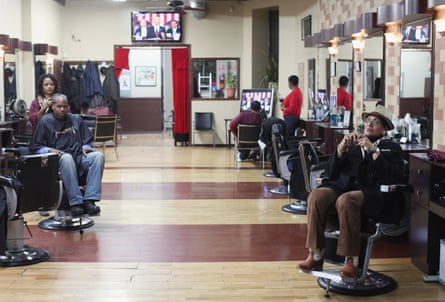
I made it a habit, during these years of covering US elections, to visit Denny Moe’s Superstar Barbershop in Harlem, New York. In 2008, the shop had turned into a voter registration site and a gathering place for Obama supporters. I went there to get an insight into how African Americans were talking and thinking about politics. Moe, a broad-shouldered man with a wide smile and easy laugh, was someone everyone seemed to trust. People spoke freely there.
When I returned to the shop during the 2012 campaign, the feeling of hope that had been so pervasive in 2008 was gone. Even so, Moe insisted that Harlem was still rooting for Obama.
The campaign that year felt predictable – Obama was favoured to win – but the political climate was sharpened by the Tea Party, a conservative grassroots movement within the Republican party that sought to repeal Obamacare. It also opposed any tax increases and pushed for deep spending cuts and abortion bans.
Birtherism – the conspiracy theory claiming that Obama was not born in the US and was therefore ineligible to be president – had emerged in 2008 and was amplified by Donald Trump in 2011, when he publicly demanded Obama’s “long-form” birth certificate. A completely false claim that could easily be debunked came to dominate media coverage and politics. The claim created a sense of doubt that never entirely lifted in some parts of the electorate, eroding trust in the political establishment.
By 2016, much of the focus was on the fact that Trump was appealing to white identity and fear, and his success amounted to a backlash against the lofty rhetoric and ideals of the Obama years. When I went back to Harlem to visit the barbershop after Trump’s victory, I asked Moe whether he felt let down by Obama. He compared the situation to inheriting a dirty house: it had taken time to clean, but he believed Obama had done it. The atmosphere was tense. Moe’s employees told me they were afraid of how divided the US had become and of what would come next.
Around that time, I noticed a shift in the US political conversation: Americans were losing their sense of a common reality. People did not debate policy but fought over whether the US president was born on US soil and whether Democratic elites ran a child sex-trafficking ring out of a pizzeria in Washington DC. Though repeatedly debunked, these ideas were widening the distance between citizens.
During the 2016 presidential campaign, I again focused my reporting on Ohio, particularly the area depicted in JD Vance’s bestselling memoir, Hillbilly Elegy. I went to a Trump rally in Wilmington, a small town in Clinton County that had become a symbol of the country’s unravelling during the financial crisis. It is about 35 miles from Middletown, where Vance grew up.
Just outside town sat the massive airpark once used by the delivery company DHL – until the company abruptly announced in May 2008 that it would pull out. “The county has about 42,000 people,” Randy Riley, the former mayor and then head of the city council told me. “Suddenly, 8,500 were out of work. We were the first to take the hit.” Politicians and celebrities came and went, making promises. “In the end,” he said, “we managed to recover.” DHL donated the airpark, with its runways, cargo facilities and hangars, to the local port authority, which redeveloped the area. Amazon began regular cargo flights from the airbase in 2015, and by early 2016 the site was reborn as a key Amazon Air hub. The activity brought jobs back to the region.
On 4 November 2016, in Wilmington, I watched Trump’s plane land with fanfare at the airbase. The rally began with a prayer. Pink “women for Trump” signs waved defiantly in response to accusations of sexism. The slogan of the night: “The silent majority is for Trump.” Many told me the liberal media had smeared them as racists, xenophobes and misogynists. “We’ve been quiet,” one man said. “But we’ll speak at the ballot box.” When I asked another man what “make America great again” really meant, he looked at me and said, simply: “Just make it great.”
After the rally, people went to a Mexican restaurant close by, seeming to forget talk of Mexican migrants stealing jobs. It was one of the town’s most popular spots. When I asked the Trump supporters there if they had personally lost work, most said no. Few had ever even met migrants except at the restaurant. The fear wasn’t rooted in personal experience – it was ambient, absorbed, an adopted narrative.
I also got a glimpse of another narrative. I visited the local Wilmington police station and went to a photo exhibition “on community grit”, with lifesize portraits celebrating the resilience of farmers, teachers, second world war veterans and other residents. I went to a cafe and a farmers’ market, and spoke at an event at the public library. Many of the people I met echoed Riley’s words: eight years after the crisis that forced DHL to leave, Wilmington was rebuilding. Young people were returning. Small farms and businesses had taken root. Downtown Wilmington and its suburbs looked tidy and well-kept. It was a far cry from the grim portrait of decline and crime that had been painted at Trump’s political rally just a few miles away. The gap between the reality of the situation and what people perceived to be going wrong was striking. Their sense of what the solutions should be – less government, for example – also felt out of touch.
The writer John Baskin, who co-founded a publishing house in rural Ohio, said about his fellow inhabitants that they voted against their own interests. Workers opposed raising taxes on the rich or improving services for lower-income families, for example.
I had described my fellow citizens that way as well. By 2016, Ukrainians had already lived through more than two years of Russian aggression and intense propaganda after Russia annexed Crimea in 2014. In eastern Ukraine, Kremlin-backed protesters claimed to be defending the interests of the region and its local industry, playing on nostalgia for the Soviet Union. Yet much of the region’s decline was caused by Russian or pro-Russian oligarchs who had bought up factories, bankrupted them to eliminate competition, and imposed brutal conditions on workers. Still, the local workers believed Russia’s intense propaganda and blamed Kyiv and the west for their economic troubles.
Talking to the residents of Wilmington, I was reminded of a moment from my reporting in Crimea shortly after Russia’s 2014 invasion. At a fruit market in Sevastopol, a Crimean Tatar vendor explained that prices had soared after annexation. A Russian woman insisted they hadn’t. “But I raised them,” he replied. She still didn’t believe him and argued that the prices had stayed the same. This wasn’t just misinformation – it was a collapse of shared reality.
In October 2020, during the pandemic, I attended another Trump rally, this time in Vero Beach, Florida, an oceanfront town popular with wealthy retirees. I was one of very few people wearing a face mask.
“Take off your mask!” one man told me, before saying he didn’t believe that social distancing was necessary. “If it’s so important, why are so many people who live in huts OK – why hasn’t half of Mexico already died out? Why aren’t millions of people dying in India? Your mask won’t protect you if you’re not healthy.” A woman told me: “Trump lets me go to church. He’s not sending me to China or making me wear something on my face.”
At the time, Florida had recorded more than 760,000 Covid-19 cases and more than 16,500 deaths. With a population of 21 million, it ranked third in the US for total infections. Investigations by USA Today and Stanford University linked Trump rallies to spikes in local cases.
Yet at these rallies, face masks were not seen as a form of protection but of submission. Public health had become inseparable from politics. These rallies weren’t just campaign events – they were performances of identity, belonging and resistance.
I was at a rally in Tampa when I noticed people treated me with suspicion, not just for wearing a face mask but for being Ukrainian. A few men in Proud Boys shirts agreed to speak to me on camera – an exception I appreciated. But many pro-Trump supporters or analysts I approached either refused to engage or immediately brought up conspiracy theories about Ukrainian election interference or Hunter Biden’s corruption. Ukraine, too, apparently had become a highly polarised topic.
By the time I returned to the US in 2024, I was anxious about whether it would even be possible to speak with Trump supporters. When they did speak to me, and they found out I was Ukrainian, they would tell me that only Trump could end the war – “bring peace to Ukraine” – by cutting aid, forcing a deal or, as many Ukrainians fear, handing the country over to Russia. On the campaign trail, Trump promised to “end the war in 24 hours”, which, in Ukraine, was interpreted as surrendering us to Moscow. His running mate, JD Vance, who had previously openly admitted he didn’t “really care what happens to Ukraine one way or the other”.
Where previously I had felt there was sympathy for Ukraine among Republicans, who were anti-communist and pro-freedom and therefore mostly anti-Russian, I noticed that American conservatives were now aligning with Moscow, arguing that Ukraine presented itself as a defender of liberal democracy, while Russia positioned itself as the guardian of “traditional” values. Ukrainian politics are largely secular; reproductive rights are broadly accepted; public education, health care and a social safety net are seen as standard. Ukrainian female veterans campaigned for years to gain access to more combat roles, while the US defense secretary, Pete Hegseth, has argued that women should not serve in combat positions at all.
Ukraine has never been so dependent on the US in its history. Our ability to defend ourselves against the Russian invasion still relies on continued American military support. And yet, rarely have the two countries felt so far apart in how each sees the world.
The deepest divide, I’ve come to believe, lies in how we think about the role of the state. In Ukraine, we had every reason to distrust it. For generations, it was something imposed: repressive, foreign, authoritarian or simply corrupt. That wasn’t a theory we debated in classrooms; it was our lived experience. Many people trusted volunteers and civil society more than the state, often seeing public officials as inefficient and mired in bureaucracy.
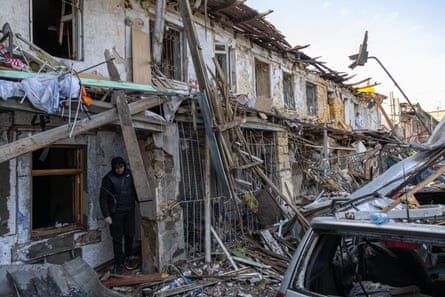
After Russia’s full-scale invasion of Ukraine in 2022, a society long sceptical of government has had to build one in real time. The war revealed a hard truth: only a functioning state can survive such a massive assault. Only a professional military can repel one of the world’s most powerful armies. Only a coordinated health system can care for the wounded under constant shelling. When bridges are destroyed, water cut off or power plants bombed, it is the state that must restore essential services. To keep the economy afloat, both public institutions and private banks have had to operate under extreme pressure. The same applies to energy systems, which have been frequently targeted by Russian missile strikes but often quickly restored by the national emergency service. That’s why it was so shocking for us, as Ukrainians, to hear about private firefighting services in California, where protection is prioritised for those who can afford to pay for it.
The war revealed to us what a state truly is. It’s not just about law enforcement but about the services that hold a country together. For us, statehood now means trains running to frontline areas; a health care system capable of treating thousands of wounded; schools and universities continuing to teach – sometimes online, sometimes under occupation; and civil servants adapting services for millions of displaced people. These are not ideological constructs, they are lifelines. And they cannot be replaced by philanthropy or the private sector. Survival cannot be outsourced.
In the US, the state is often suspect, seen by some as a threat to freedom or an inefficient relic. On my trips to the US, people readily told me it was not the role of government to care for vulnerable people; it was the responsibility of individuals, organisations and nonprofits.
I found it hard to grasp how philanthropy could stand in for the state. Donors weren’t filling gaps left by taxes. They were deciding which problems to address based on personal preference. If they cared about homelessness, they gave to that cause. If they preferred animal rights, that’s where their money went. The system was driven by choice, not need, which made it feel, to me, profoundly broken. People seemed more comfortable discussing privately funded homeless shelters (and even donating to that cause) than debating public housing.
Today, it’s not just Maga voices who demonise state institutions but also Silicon Valley libertarians. One of the leaders of the US labour movement recalled to me a private conversation she had had in 2017 with a billionaire tech entrepreneur, venture capitalist and prominent libertarian thinker. For a while, she couldn’t understand why libertarians – or more broadly, radical free-market ideologues – were in such denial about climate breakdown. But then it became clear: the climate crisis is not something even the wealthiest individuals or most powerful corporations can tackle on their own. It demands large-scale state intervention and international cooperation, which runs counter to their ideological rejection of collective governance and public regulation.
What I see now in the US is a profound inability to discuss seriously how the state can serve the public good. Proposals for universal health care – common in many industrialised democracies globally – are framed by many as radical or unaffordable. Efforts to cancel student debt are portrayed not as social policy but as moral hazard. At a storytelling festival I attended in Tbilisi, Georgia, in the summer of 2025, several high-profile American data consultants and thinkers joined in a discussion about how artificial intelligence is reshaping our lives, but they carefully avoided talking about state regulation of tech and social media platforms, as if it was too controversial to mention. The Europeans sitting near me raised their eyebrows each time they skirted the issue.
There is nothing comforting about life in Ukraine today. As I write, we are living through a brutal war. Russian bombs fall daily. The danger is constant. People are dying. Our past was never particularly good – we were never “great” in the way some nations imagine themselves to have been. And there is no going back – not to the world before 2014, and certainly not to the one before 2022. Yes, we are fighting for a better country. But the future is uncertain. More importantly, it depends entirely on how we live now. What we truly have – what we must protect and hold on to – is the present.
A version of this piece originally appeared on thedial.world. It will be included in the Dial’s forthcoming collection How We See It: The World Looks at America in the Age of Trump