
-
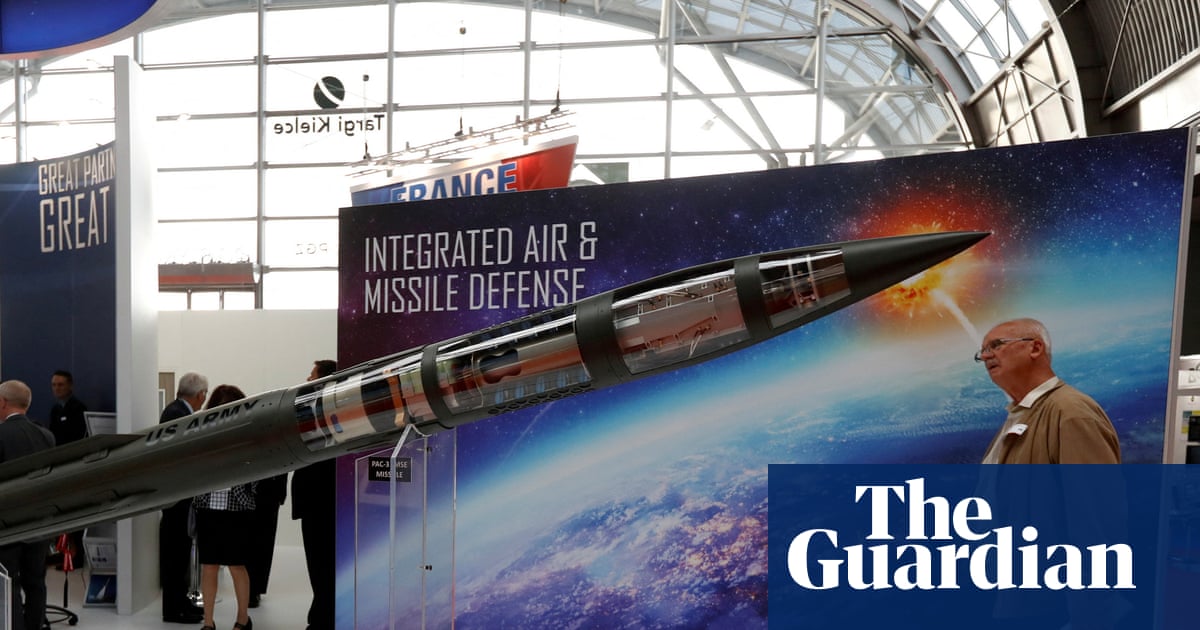
Ukraine could benefit from a Lockheed Martin project to build a new, lower-cost Patriot interceptor, the PAC-3 Adapted Capability Effector (ACE) missile, Reuters has reported. The news agency, citing defence and US government sources, said that despite Donald Trump casting doubt on a deal for Ukraine to build desperately needed Patriots, “no order was given to halt the discussions”, and talks continued with US arms makers, military officials and others. Ukraine has proven adept at producing large volumes of dramatically cheaper yet equally or more effective missiles and drones compared with those made by western allies.
-
At least 17 people died on Wednesday as Kyiv again came under heavy Russian bombardment. Ukrainian forces, starved of suitable interceptors, were unable to shoot down a single missile. A US official told Reuters that the most feasible option for Patriots would be making some components in Ukraine and assembling them in Germany, where an older Patriot model is already made and the more advanced PAC-3 is expected to be produced as well. Trump has raised security concerns about handing over highly secretive Patriot blueprints in their entirety to Ukraine.
-
Any plan for Ukraine to be involved in Patriot production could still take a year or more to come to fruition, officials have cautioned, with new component lines typically not up and running until three to seven years after a licensing deal is signed. Lockheed Martin suggested an accelerated timeline for Patriot PAC-3 ACE in an announcement on 20 July, emphasising that the use of the same launchers and software would speed up development. The interceptors would cost less than half of a normal Patriot missile, it claimed.
-
Germany’s interior minister warned of “a new level of danger” after a drone carrying explosives was found at Leipzig airport, while a DHL plane in flight was hit by a flying object. German police used a bomb disposal robot to defuse and destroy the explosive device. Deborah Cole and Andrew Roth write that suspicion has fallen on Russia given the airport’s status as a Nato and German military logistics hub, and as the base for Ukraine’s Antonov Airlines in Europe. The quadcopter fitted with an explosive device was found near a Ukrainian Antonov cargo plane, according to media reports.
-
Vladimir Tkachuk, the head of Russian drone manufacturer Uraldronzavod, was critically injured in a car bombing, in what appeared to be the latest in a series of assassination attempts targeting figures linked to the country’s war in Ukraine, Pjotr Sauer writes. A bomb planted beneath his Mercedes exploded, according to Russian state media, killing his bodyguard. On Saturday an explosion outside an upmarket restaurant in central Moscow killed five people. Col Gen Aleksandr Chayko, the commander of Russia’s aerospace forces, was reportedly celebrating his birthday at the restaurant.
-
Ukrainian authorities have ordered hundreds of families with children to leave the city of Kramatorsk in eastern Ukraine because of intensifying Russian strikes. Russian forces are within 20km (12 miles) of the city’s eastern edge, according to DeepState, a war monitor close to the Ukrainian army. A total of 525 children and their guardians are being forcibly evacuated. Kramatorsk is part of the “fortress belt” that Ukraine’s troops are fighting to hold.
-
Russia’s Saratov refinery stopped processing crude oil on 2 August after a Ukrainian drone attack damaged production facilities and triggered fires at the plant owned by the country’s largest oil company Rosneft, two industry sources told Reuters. They said the refinery’s CDU-6 crude distillation unit, its only crude processing unit, was shut down. The unit, with a nominal capacity of 20,000 tonnes of oil per day, could take between two and three weeks to repair. Russia’s imports of gasoline and diesel from Belarus surged in July because of Ukrainian strikes disabling Russian oil refineries, according to calculations by Reuters.