
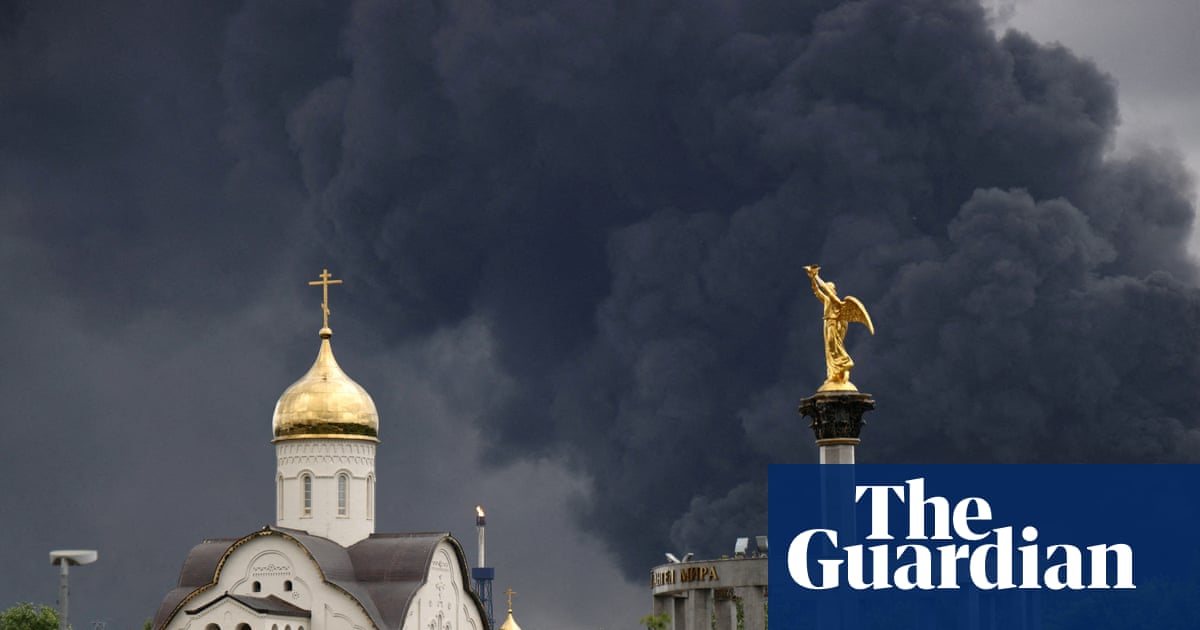
The main target of Ukraine’s largest-ever drone attack on Moscow was apparently an oil refinery on the city’s edge (Moscow oil refinery struck in Ukraine’s biggest air raid on city since start of war, 18 June). However, it also caused some civilian injuries and damage to private property. It is possible that this other damage was entirely unintended, but it is reasonable to suspect otherwise when the Ukrainian president speaks of bringing the war closer to ordinary Russians.
The desired effect of such action is to increase those civilians’ sense of insecurity and force the Russian president to quell popular discontent by ending the war he started. Unfortunately, though, a strategy of “morale bombing” a city’s residents is one that suffers from being inherently unjust. Thus, it has the potential to undermine the legitimacy of Ukraine’s self-defensive war effort.
Russian civilians are not morally liable to attack. Unlike enemy combatants, civilians lack the capacity to injure or kill, so they present no military threat to be violently neutralised. This is a distinction that must be recognised by both sides in the Russia-Ukraine war. Although Russia was wrong to invade its neighbour in February 2022, Ukraine still has a responsibility to avoid the deliberate harming of innocents when violently defending itself. Since the invasion, Russia appears to have targeted the civilian residents of Ukrainian cities on many occasions.
However, for the simple reason that two wrongs do not make a right, Ukraine does not gain any moral permission to retaliate against Russia by launching indiscriminate attacks. Ukraine should instead underline the justness of its cause by always respecting the innocence of all civilians.
Prof Christian Enemark
University of Southampton