
Russia is exploiting a critical global shortage of air defence interceptor missiles as it ramps up its airstrikes against Ukraine, amid warnings that a shortfall for the Patriot system in particular is creating a “window of vulnerability” for the countries that rely on them.
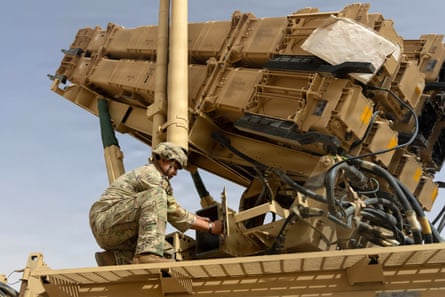
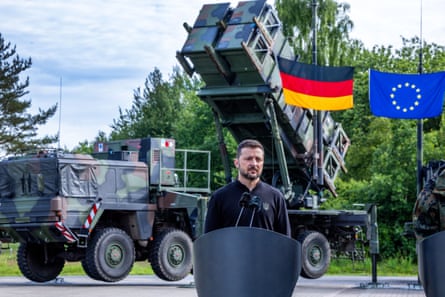
The MIM-104 Patriot manufactured by Raytheon and Lockheed Martin is the primary surface-to-air system of the US military to shoot down ballistic missiles, and has been widely relied on by US allies – not least in the Gulf, as well as by Ukraine.
Each individual battery, consisting of multiple elements, costs about $1bn (£740m) and their heavy use during the current protracted US-Israeli campaign against Iran, in addition to Ukraine, has triggered a scramble for the dwindling supply of interceptor missiles.
On Tuesday, in the aftermath of the latest massive Russian air raid on Ukraine – in which Moscow fired 73 missiles and almost 700 drones – President Volodymyr Zelenskyy repeated his plea from last week to the US for more stocks of interceptors, as experts warn that the already well-documented shortages will have been noted from China to Iran, even as the US moves to step up production.
And while the most obvious impact is for Ukraine and the Gulf in the event of protracted tensions from a partial peace deal with Iran, the shortage has a longer tail.
Interceptor shortages – notably Patriot – will also affect Nato’s readiness planning, amid assessments of a growing Russian threat to Europe, with Germany, the Netherlands, Greece, Spain, Poland and Sweden among those using the system.
If a shorthand for the crisis is too many wars and not enough interceptors, analysts say the problem has been created by the convergence of multiple issues, including cost-cutting, mistaken assumptions in long-term defence planning and procurement – and a failure to anticipate the risk that in a US-Israeli war with Iran it would be able to continue firing missiles on its Gulf neighbours over an extended period.
That conflict, according to some estimates, has depleted almost a third of the stockpiles of Patriot interceptor, with Gulf states – according to one estimate – collectively firing more than 1,100 interceptors. The threat of Iranian ballistic missiles is still present, with two reportedly fired at Kuwait on Monday.
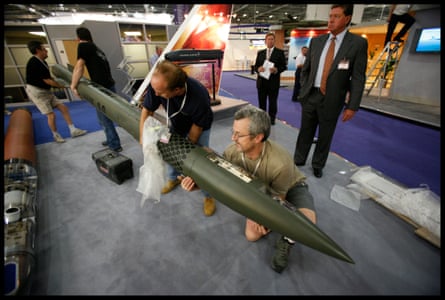
At the heart of the issue is the rate – about 600 a year – at which Lockheed Martin makes the interceptors for the batteries. It has recently said it aims to more than treble production of the interceptors, which cost about $3m each.
“Thirty two per cent [of interceptors fired] sounds about right,” said Mark Cancian of the Center for Strategic and International Studies, a US-based thinktank. Its audit published last week of the weapons used in the Iran war describes “the time needed to rebuild inventories” of missiles of all sorts as “a major concern”.
“We know the Gulf states have used most of their stockpile,” he added, saying that while the total supply of interceptors stood at about 68%, the consequence was countries that needed them most were now competing for a declining pool.
He said there was a “window of vulnerability” as inventories had been used up and time was required to rebuild them.
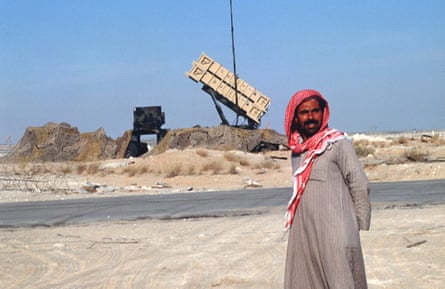
And while the Patriot is seen as highly effective (if not foolproof) after an inauspicious debut against Saddam Hussein’s Scud missiles during the 1991 Gulf war, the high cost of the system meant it was a victim of a peace dividend in the aftermath of the cold war.
“Even during the cold war munitions systems had a hard time in budget processes,” said Cancian. “You buy an air defence missile, you might end up with it in storage for 20 years, and if it’s not used then dispose of it. It’s not like if you put money into a plane, or tank or ship that you at least can use for exercises.”
One consequence is countries with Patriots kept small interceptor stockpiles as many did not anticipate a pressing scenario where they may be used. While other air defence interception systems exist – such as Germany’s cheaper Iris-T, which is favoured against cruise missiles and drones – the Patriot is regarded as the best defence against high-flying ballistic missiles.
“That’s where we were at until Russia’s full-scale invasion of Ukraine in 2022. That changed a lot of thinking about how protracted conflict might lead to running short. The Biden administration started efforts to build up defence industrial, but it takes time,” Cancian said.
“If you want to increase production capability it takes years, which is why we will be looking at a shortage now probably for two to three years.”
His colleague Tom Karako, the director of the Missile Defense Project at the Center for Strategic and International Studies, told the New York Times in April that the US and Israel had begun the Iran war with a “big hole” in their interceptor stockpiles.
“The hole got a lot bigger over the last month as we keep shooting these things off,” he said – and with no meaningful ceasefire with Iran, that hole remains.
Already that appears to have shaped Russian tactics in the war in Ukraine, where access to Patriots has long been a source of friction between Kyiv and a Trump administration whose support for Ukraine has at best been half-hearted and at worst verging on hostile.
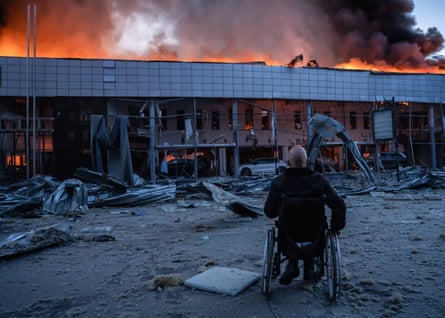
The problem has become increasingly urgent amid Russian threats to launch more massive systemic air attacks against Ukraine, including government buildings.
“It’s not good,” said Phillips O’Brien, a professor of strategic studies at the University of St Andrews. “Ukraine has had to deal with this before as the Trump administration has slow walked deliveries to Europe for the Ukrainians for a while. In January the Ukrainians were reportedly almost out of Patriots.
“So it’s not unexpected and they have contingencies, but it does raise the percentage chance of the Russians getting hits on crucial infrastructure […] I think the huge ramping up of strikes on Ukrainian power and heating in January was done with the knowledge that the US had left Ukraine with a real Patriot shortage. Remember they used an Oreshnik [ballistic missile] then in their mass strike on western Ukraine. That was a sign that they really wanted to hit those targets.”
Yuri Ignat, spokesperson for Ukraine’s air force, underlined the point. “If we are talking about countering a ballistic threat, then, apart from the Patriot systems, there is currently nothing in Ukraine capable of shooting down ballistic missiles, and so we have an extremely problematic situation regarding our missile stockpile.
“Today, there are Patriot systems in Ukraine, but there is a serious need for additional supplies against the backdrop of threats from Putin, threats from Russia to continue strikes specifically on the capital – as they talk about strikes on decision-making centres, they declare this and so on – so communication is being carried out to help us with these resources.
“That is precisely why President Zelenskyy constantly emphasises issues relating to air defence, particularly the supply of interceptors.”
Although Trump and his defence secretary, Pete Hegseth, have insisted the US has sufficient supplies of munitions to fight any war, including with China over Taiwan, some have questioned whether the Trump administration anticipated what a months-long war against an undefeated Iran could mean in practical terms.
Pentagon officials “knew the reality of our military stockpiles and hopefully told someone, ‘Hey, if we go to this fight, even in the most conservative estimates, we are drawing down our stockpiles to a critical level’,” Virginia Burger, a former marine officer and the senior defence policy analyst at the US-based watchdog Project On Government Oversight told the Associated Press last week.