
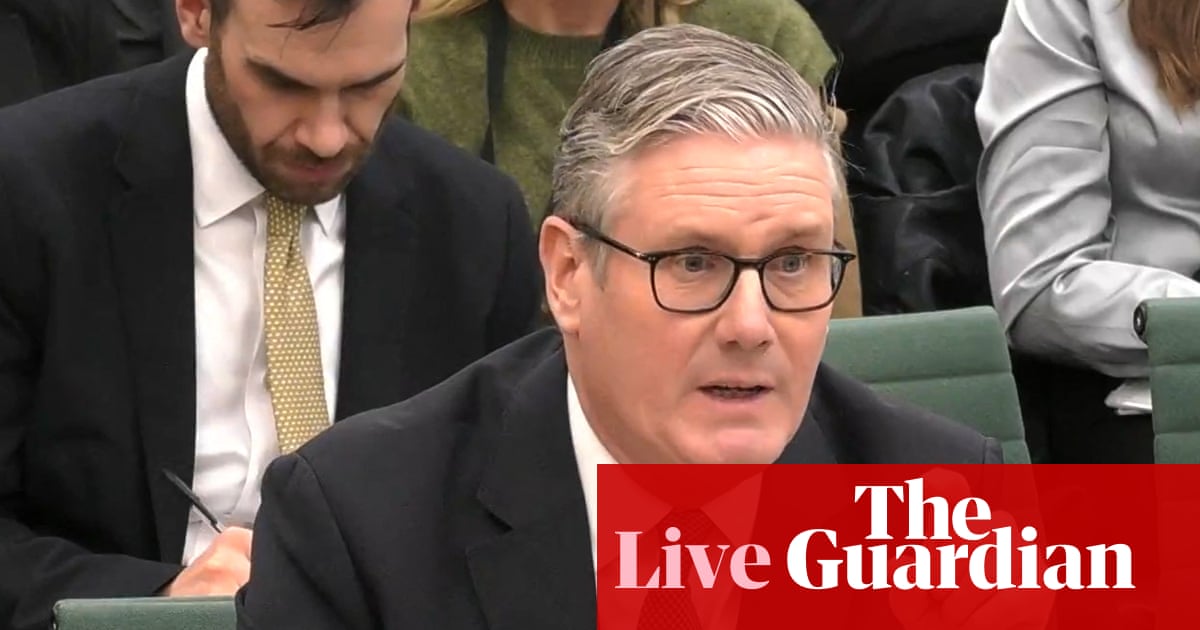
Simon Hoare (Con) asks how gutted the PM is by the BMA’s decision to go ahead with the resident doctors strike.
Starmer says he’s very disappointed.
Q: Haven’t they got you over a barrel?
Starmer does not accept that. He says the government is making progress on modernisation in the NHS.
He says the NHS has not “move enough in the right direction yet”.
Q: Will you tell the BMA there is no additional money on the table? What do you expect them to do next?
Starmer says he wants them to reflect on what they are doing.
They are losing the support of the public, and losing support of colleagues in the NHS.
I think they’ve lost the sympathy of the public, frankly, and I think they’ve lost the sympathy of their colleagues, their non-doctor colleagues in the health service, who are getting on with their jobs, many of them on a much lesser rate of pay increase than the BMA, than the doctors got.
I’d appeal to the doctors themselves to push back against the BMA. In relation to this, they are losing ground in terms of the sympathy they might otherwise have had for the difficult job that they do.
UPDATE: Asked, “on a scale of 1 to 10”, how “gutted” he was by the vote to strike, Starmer replied:
Very gutted.
Asked if that was 10 out of 10, he replied:
It’s 10 out of 10. It’s irresponsible at any time, particularly at the moment.
“It comes on the back of a very substantial pay increase in the last year or so.
There’s a deal that we’ve put on the table that could have been taken forward, and so I think it’s irresponsible action by the BMA, and not for the first time.
Jessica Elgot is the Guardian’s deputy political editor.
Major business groups have written to the business secretary, Peter Kyle, calling on the Lords to pass the employment rights bill, saying they stood by their deal with unions.
Conservative and cross-bench peers voted down the bill again last week, protesting against the lifting of the compensation cap for unfair dismissal. That measure came in exchange for the government and trade unions agreeing to remove day one rights to claim unfair dismissal – a Labour manifesto pledge. Instead the bill will reduce the qualifying period from two years to six months.
Business lobby groups said the time had now come for the bill to be passed to give certainty to businesses.
In a joint letter, six business organisations said that despite their remaining concerns they wanted to move forward with the agreement, or risk losing the concession on day one rights.
The letter has been signed by: the Confederation of Britsh Industry, British Chambers of Commerce, the Chartered Institute of Personnel and Development, the Federation of Small Business, the Recruitment and Employment Confederation and Small Business Britain.
In it, they say:
On the bill more broadly, we believe that the best way forward is to keep working with the government and trade unions to find balanced solutions through secondary legislation. To avoid losing the 6 months qualifying period, we therefore believe that now is the time for parliament to pass the bill.
The Institute of Directors is the only major business group not to have signed.
Q: Can you give an update on the situation with regard to Ukraine?
Starmer says this is critical period for Ukraine, and for Europe as a whole.
European history is full of peace agreements that have failed, he says.
Putin will “keep coming back for more” if he has the chance, Starmer says.
He says 5,000 Russian soldiers are being killed every week.
There is a text in play “that may take us forward”, he says.
He says decisions on the most sensitive issues, such as territory, are for Ukraine to decide.
He says there must be security guarantees.
And Nato, Europe and the EU must be involved in decisions that affect them.
In the meantime, “we must keep Ukraine in the fight”, he says.
He says he hopes they can make further progress in Berlin tonight.
The route to peace is not a straight road,
Q: Would the security guarantees means British troops on the ground?
Starmer says, if necessary, this might involve a ground deployment.
But the first concern is to get a just and lasting peace, he says.
Hillier asks Dhesi if he has a final question on this, but Dhesi says he does not want to delay Starmer’s departure for Berlin.
And that’s the end of the session.
Meg Hillier picks up on this.
Q: You sound surprised at how long it takes to do things in government, and that you can’t just pull a lever and make things happen.
Starmer says he would say “frustrated rather than surprised”.
But he does not accept this means Labour was not prepared for government.
Ruth Cadbury (Lab), chair of the transport committee, goes next.
Q: What has been hardest delivering the Plan for Change?
Starmer says it is the time it takes to deliver.
Q: In Switzerland they set the rail timetable 10 years in advance, then they build the infrastructure. Would you consider that here?
Starmer says he is not sure he would “go the full Swiss”. In general, he is in favour of long-term planning, he says. But he says things do change over 10 years.+
Simon Hoare (Con) asks how gutted the PM is by the BMA’s decision to go ahead with the resident doctors strike.
Starmer says he’s very disappointed.
Q: Haven’t they got you over a barrel?
Starmer does not accept that. He says the government is making progress on modernisation in the NHS.
He says the NHS has not “move enough in the right direction yet”.
Q: Will you tell the BMA there is no additional money on the table? What do you expect them to do next?
Starmer says he wants them to reflect on what they are doing.
They are losing the support of the public, and losing support of colleagues in the NHS.
I think they’ve lost the sympathy of the public, frankly, and I think they’ve lost the sympathy of their colleagues, their non-doctor colleagues in the health service, who are getting on with their jobs, many of them on a much lesser rate of pay increase than the BMA, than the doctors got.
I’d appeal to the doctors themselves to push back against the BMA. In relation to this, they are losing ground in terms of the sympathy they might otherwise have had for the difficult job that they do.
UPDATE: Asked, “on a scale of 1 to 10”, how “gutted” he was by the vote to strike, Starmer replied:
Very gutted.
Asked if that was 10 out of 10, he replied:
It’s 10 out of 10. It’s irresponsible at any time, particularly at the moment.
“It comes on the back of a very substantial pay increase in the last year or so.
There’s a deal that we’ve put on the table that could have been taken forward, and so I think it’s irresponsible action by the BMA, and not for the first time.
Patricia Ferguson (Lab), chair of the Scottish affairs committee, is asking the questions now, and she raises the transition away from North Sea oil and gas.
Starmer says the government is committed to managing the transition responsibly.
Q: Why is it taking so long to deliver alternative jobs for Grangemouth, following the closure of the refinery there?
Starmer says funding is in place to support alternative projects there. The government is trying to work out what plans are viable.
He says he thinks “the potential for Grangemouth is huge”, with projects like carbon capture.
Q: Will there be new jobs there soon?
I hope so, says Starmer.
Q: The Danes have been doing this for years. They are brought up to think a good Dane is a green Dane. Should we do the same here?
Starmer says he thinks the commitment to action is here in the UK.
People can see the impact of climate change, and “every more extreme climate conditions”.
There are fewer and fewer climate denier.
Q: So you will consider the idea a good Brit is a green Brit?
Starmer says he is not sure about that. The Green party might have something to say. But thinks more and more people cycle and walk, he says.
Bill Esterson (Lab), chair of the energy committee, goes next.
Q: With energy bills going up, are you worried that people will think you won’t meet your pledge to get bills down by £300.
Starmer says he is “pulling every lever” to get bills down.
He says, in the long term, moving to renewable energy is the best way to address the problem.
Q: There are claims climate change could reduce GDP by 20%.Starmer says that shows why it is important to get climate policy right.
Starmer says Ukraine has been a central focus for him.
He says he won’t let up on efforts “to bring about a just and lasting peace that affects Ukraine, Europe and the United Kingdom”.
Q: How are you going to ensure there is value for money in defence procurement?
By increased oversight, Starmer says.
Tan Dhesi (Lab), chair of the defence committee, goes next.
Q: When will the defence investment plan be published?
Starmer says the government is working hard on that. It will be published when it is ready.
Q: You sacked the defence procurement minister (Maria Eagle). Wouldn’t it have been better to have kept them in post?
Starmer says lots of ministers are involved in defence investment. He says the current defence procurement minister (Luke Pollard) is doing an excellent job.