
The yellow school buses, crisp spiral notebooks and cramped dorm rooms are still around – but students and parents can expect an element of uncertainty and confusion this school year.
President Donald Trump’s second administration has used the power of the presidency to pressure university and K-12 schools to retreat from diversity, equality, and inclusion initiatives and support for transgender students; pull back funding from research universities; throttle K-12 funding sources; and crack down on immigrants and foreign students.
The US education system faces further upheaval due to Trump’s signature “Big Beautiful Bill,” which will upend student loans, school voucher programs and university endowments in the coming years.
And then there are the broader economic, technological and cultural changes affecting schools, such as concerns about tariffs and inflation, the rise of artificial intelligence in classrooms and the growing movement to ban cell phones during the school day.
Taken together, the theme of this back-to-school season is uncertainty, education experts told CNN.
“While there have been some new policies and a rash of executive orders, I think there’s still a lack of clarity around what that actually means for school districts and for universities,” said Kris DeFilippis, clinical professor at New York University’s Steinhardt School of Culture, Education, and Human Development. “There is this sort of chaos and confusion that is leading to a lot of this, even around funding.”
“The biggest theme that I hear when I talk to people who work in schools is a feeling of uncertainty,” said Erica Meltzer, the national editor at Chalkbeat, a nonprofit news organization covering education.
Still, the US education system is so localized, particularly on the K-12 level, that many students, parents and teachers may not see much change at all.
“Federal law essentially says the federal government cannot direct curriculum instruction, they can’t shape what happens day-to-day in schools. That is still the case,” said Jon Valant, director of the Brown Center on Education Policy at The Brookings Institution, the nonprofit think tank. “It’s not going to be that extreme because it’s just not the federal government that controls that stuff for the most part.”
One of the most notable changes to education under the new Trump administration is its effort to pressure schools to retreat from so-called “woke” policies, such as initiatives for Diversity, Equity and Inclusion, or DEI.
On Trump’s second day in office, he signed an executive order calling out institutions of higher education for using the “dangerous, demeaning, and immoral race- and sex-based preferences under the guise of so-called ‘diversity, equality, and inclusion (DEI).’”
To enforce these changes, the administration has in some cases withheld federal funds from schools, citing violations of civil rights law.
Due to the pressure, many universities and schools have changed or disbanded their DEI programs. But experts said the term DEI remains a bit vague, and it’s unclear if schools have moved away from certain policies or whether they’ve just changed their names to something less controversial.
“I don’t think that work has gone away. In some cases it’s required by law,” said Jon Fansmith, a senior vice president at the American Council on Education. “You have to support students based on all sorts of reasonable accommodations that they’re entitled to under civil rights laws. In addition, no school wants to be an unwelcoming or unfriendly place to their students.”
Meltzer, the Chalkbeat editor, said there’s a lot of variation in how school districts are responding to the increased scrutiny on DEI programs.
“Does a school have a luncheon to celebrate Black students or Native American students at graduation time? Is there a Future Black Engineers club at a high school? Is there a mentorship program for younger teachers of color?” she said. “These are some of the types of programming that are under scrutiny and that people aren’t sure will they or won’t they get in trouble for that kind of thing.”
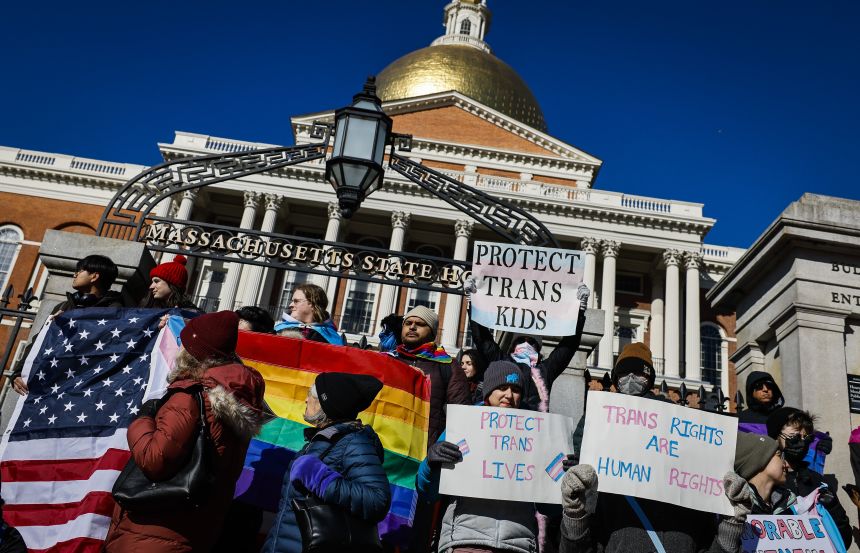
The first year of the Trump administration has also featured a reversal of support and accommodations for LGBTQ students – transgender ones in particular.
An executive order on Trump’s first day back in office, titled “Defending Women from Gender Ideology Extremism and Restoring Biological Truth to the Federal Government,” directed the government to use the term “sex” instead of “gender” and said that humans are either male or female, determined by biology at conception.
In February, Trump signed an executive order titled “Keeping Men Out of Women’s Sports” with the goal of banning transgender women and girls from competing in women’s and girls’ sports. The NCAA subsequently announced an overhaul of its transgender athlete policy to limit transgender women from participating in women’s sports.
Last month, faced with the prospect of losing $175 million in federal funding, the University of Pennsylvania agreed to block transgender women athletes from female sports teams and erased the records set by swimmer Lia Thomas in 2022. On the K-12 level, the Department of Justice has filed lawsuits against California and Maine over their policies on transgender students’ sports participation.
DeFilippis, who worked as a middle and high school teacher, said he was worried for LGBTQ students trying to understand their own identities in this new environment.
“The executive branch has signaled that LGBTQ students and trans students are generally less safe than they were to exist as who they are in school districts,” he said. However, he noted that it depends on the individual school district and state law.
Compared to K-12 schools, universities and colleges typically rely more heavily on federal dollars, so the Trump administration’s efforts to cut funding and scientific research grants have had a more significant impact.
Most prominently, Ivy League schools Columbia and Harvard have faced the biggest challenges, with the federal government threatening to withhold funding and research grants of all kinds due to what the Trump administration says are violations of civil rights law on campus — in particular, accusations of antisemitism during protests over the Israel-Hamas war.
Columbia agreed last month to pay the government over $220 million to resolve several federal probes into allegations that the university had violated anti-discrimination laws. The university did not admit to any wrongdoing, but the settlement was crafted to “allow our essential research partnership with the federal government to get back on track,” acting university president Claire Shipman said in a statement, citing hundreds of millions of dollars at stake.
Meanwhile, the government has frozen $2 billion in funding for Harvard, leading the university to file a lawsuit to claw those funds back. That case remains open.
The Trump administration has similarly frozen funding for UCLA – about $584 million is suspended and at risk, the chancellor said – as part of what the administration has termed efforts to crack down on antisemitism and protect civil rights.
The cuts to federal research funding – whether frozen, cancelled, or never allocated – have hit higher education of all kinds, from Ivy League institutions to local colleges, Fansmith said. The federal cuts especially targeted research touching on issues of gender or race.
“Students in those fields who are looking to come back to campus and hoping to pursue research work and pursue that as part of their academic studies are going to find a different environment that will vary from school to school … but everybody is going to be impacted,” Fansmith said.
A delay in the release of federal funds for K-12 schools has had its own costs, too.
Nearly $7 billion of funding was supposed to go to the states for K-12 education programs on July 1, but a day beforehand, the Department of Education sent a letter saying the money would be frozen pending a review. The funds, which were approved by Congress, were expected to go toward school districts and nonprofits that run free enrichment programs, such as teacher education and recruitment and English language programs.
The White House Office of Management and Budget claimed at the time that “many” of these programs “have been grossly misused to subsidize a radical leftwing agenda.”
Weeks later, the Trump administration unfroze the funds and released the money to the states. “Guardrails are in place to ensure these funds will not be used in violation of Executive Orders or administration policy,” an OMB official said.
Even though the money has since been sent out, the pause in releasing those funds led to a scramble among school districts and cutbacks in budgets.
“The only rational response to an uncertain funding stream is to not budget it into your spending,” said Chase Christensen, the superintendent of Sheridan County School District 3 in Wyoming.
DeFilippis also said budget uncertainty has consequences: “So I know a lot of districts have just entirely paused things until they figure out exactly what they’re going to get (and) when they’re going to get it.”
Valant said the government’s decision to back down from its freeze shows that federal funding for K-12 education still has bipartisan support.
“They have broad support across the American public and across Congress,” he said. “Those funds are used everywhere.”
Though not directly education-related, the Trump administration’s crackdown on immigration has sparked fear among immigrant families of schoolchildren in the US and a decline in foreigners coming to the US to study, experts said.
For K-12 schools, immigrant families may be more wary of attending community events due to ICE’s aggressive immigration enforcement. In Los Angeles, for example, parents like Anna Bermudez and her husband noticed other parents were absent from first day of school drop-offs compared to previous years.
“It sucks, and it’s horrible and heartbreaking,” she told CNN last week. “It should be a happy day, and bringing our kids to school feeling safe. But the fact that you don’t feel safe, even dropping them off, you know? It’s very emotional.”
Valant said the fear could impact attendance as well as the learning environment in some school districts with heavy immigrant populations.
“A lot of people are nervous about what the general threat of ICE and immigration raids and enforcement could mean for attendance rates, say, of undocumented kids or kids with undocumented relatives,” he said.
As for higher education, a record 1.1 million international students studied in the US during the 2023-2024 academic year, with India the top country of origin, according to the Institute of International Education. However, universities and colleges are expecting a significant drop in international students this coming year, Fansmith said.
“What you get is – both for students on American campuses already from foreign countries and students abroad considering it – they just don’t know how safe they feel committing to coming to the United States to study,” he said.
The “Big Beautiful Bill,” the name for the massive tax and budget bill signed into law by President Trump, makes significant changes to the US education system in the coming years, including:
- Student loan changes: The law puts a cap on Parent PLUS loans, limits the maximum graduate student loans and overhauls the student loan repayment plan.
- School vouchers: Using an unusual tax structure, the law creates a national school voucher program that states can choose to opt into.
- Raised endowment tax: Colleges with endowments over $2 million per enrolled student must pay an endowment tax of 8%, up from 1.4%.
Though the exact details are still to be determined, the legislation has already pushed universities to make cuts to their budgets and pressed schools to consider the potential loss of enrollment.
Yale University, for example, said it will pay an estimated $280 million in the first year of the increased endowment tax. The university cited that cost in announcing a 90-day hiring freeze and 5% budget cut in non-salary expenses.
DeFilippis, the NYU professor, said the uncertainty and confusion around the changes has meant students are much less willing to take out loans, unsure of what type of support they’ll get from the federal government.
Some of the biggest changes this school year stem from broader cultural, technological and economic trends, far removed from politics.
“Schools don’t operate in a vacuum where they’re only affected by education policy and education programs,” Valant said. “They’re really integrated with everything else in American society.”
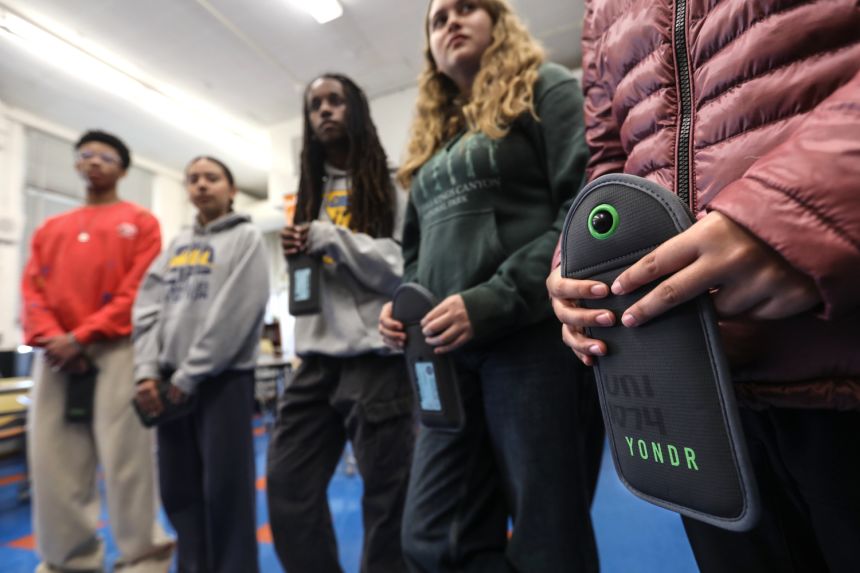
For one, at least 31 states have passed bans or restrictions on cell phone usage during school hours over the last few years, according to a tally from Education Week. Spurred in part by Jonathan Haidt’s bestselling book “The Anxious Generation,” the bans reflect a recognition that cell phones and social media distract from a safe and open learning environment.
The crackdown on cell phones also comes amid the rise in artificial intelligence, which threatens to upend school education. Will this new technology enhance student learning or just make it easy for them to quickly “write” a 500-word essay? Will AI help teachers spend more time with their students, or will it replace them altogether with a chatbot? Schools are quickly having to answer those questions as the technology gains mainstream adoption.
Finally, schools are sensitive to economic downturns or higher prices due to tariffs and inflation. A recession this year could lead to cutbacks or reduced budgets for schools, with broader effects on the public.
“They are part of the economy, they are part of the community, often they are very large employers,” Meltzer said. “To the extent that they feel constrained in their budget, that has a lot of ripple effects.”
CNN’s Andy Rose, Sunlen Serfaty, Riane Lumer, Tami Luhby, Amanda Musa and Betsy Klein contributed to this report.